
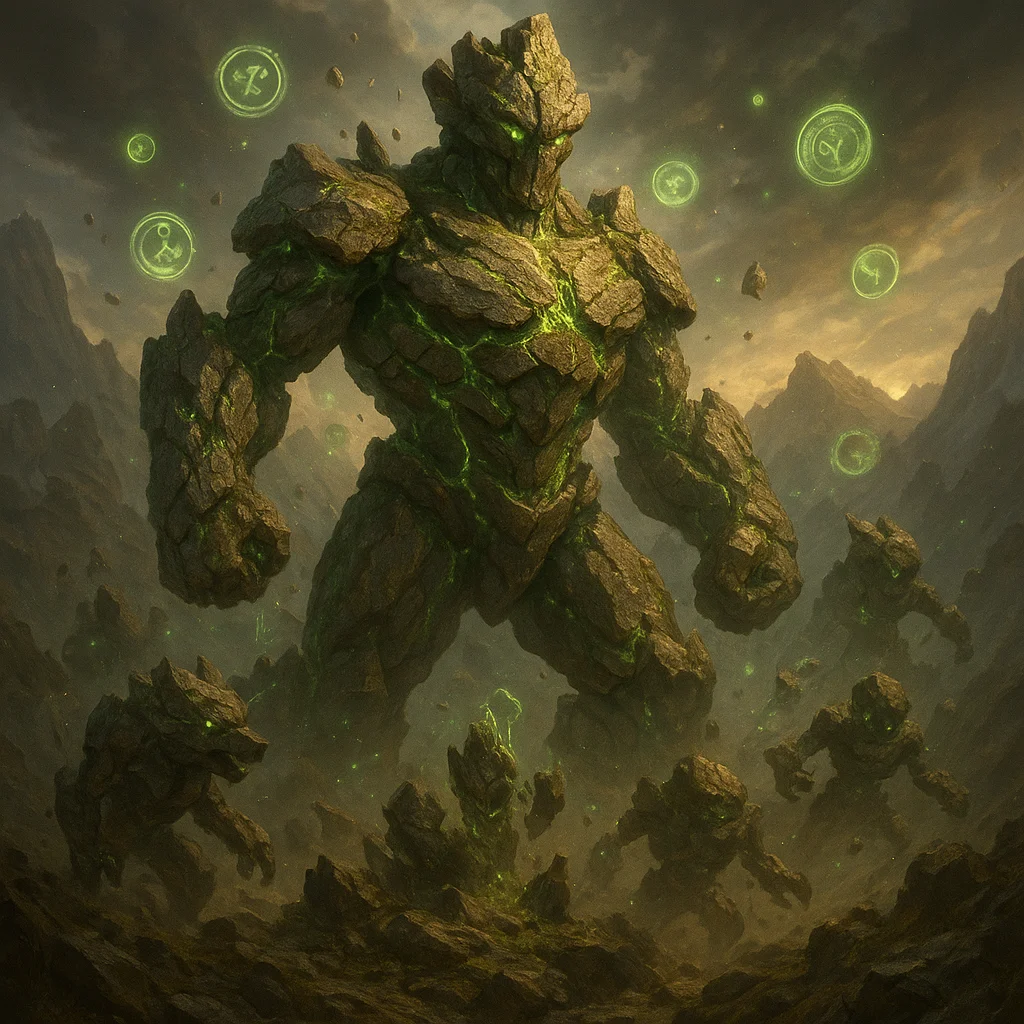

Earthbending Land Creatures: Mastering +1/+1 Counter Synergies in Avatar Draft
When Avatar: The Last Airbender arrived on MTG Arena on November 18, 2025, it brought with it a groundbreaking mechanic that fundamentally reimagines how lands function in Limited formats. Earthbending—the signature green-based ability that transforms your mana sources into formidable creatures—has quickly become one of the most strategically complex mechanics in recent draft environments. What makes earthbending particularly fascinating, however, isn’t just its ability to animate lands, but rather how it creates an entirely new framework for +1/+1 counter synergies that experienced drafters can exploit for devastating advantage.
Understanding the Earthbending Mechanic
At its core, earthbending follows a deceptively simple template: “When you earthbend X, target land you control becomes a 0/0 creature with haste that’s still a land. Put X +1/+1 counters on it. When it dies or is exiled, return it to the battlefield tapped.” This mechanical design, however, contains several critical nuances that separate competent earthbending players from true masters of the archetype.
First and foremost, earthbent lands start as 0/0 creatures, meaning their entire power and toughness derives exclusively from the +1/+1 counters placed on them. This isn’t merely a technical detail—it’s the foundation upon which the entire synergy package is built. Unlike previous land animation mechanics such as awaken, which granted base stats and creature types, earthbending creates pure counter vessels that interact favorably with an extensive suite of counter-matters cards.
Furthermore, earthbent lands maintain their land type and mana-generating abilities even after animation. This dual nature creates fascinating gameplay decisions: your Forest can tap for green mana during your first main phase, then swing as a 3/3 creature with haste in your combat step. The mechanic also includes a crucial safety valve—when an earthbent land dies or is exiled, it returns to the battlefield tapped. This built-in protection ensures you won’t suffer catastrophic mana loss from board wipes, though the tempo loss of returning tapped can still prove punishing.
The Counter Multiplication Engine
What truly elevates earthbending from a simple combat trick to a legitimate draft archetype is its remarkable synergy with cards that care about +1/+1 counters. Since every point of power and toughness on your animated lands comes from counters, any effect that amplifies, rewards, or manipulates those counters generates exponential value.
Bristly Bill, Spine Sower exemplifies this principle perfectly. This powerful creature offers two distinct modes of counter interaction: whenever you play a land, you can place a +1/+1 counter on target creature, and for five mana, you can double the number of counters on each of your creatures. The implications for earthbending strategy are profound. Imagine earthbending a land for three counters, making it a 3/3 creature. On a subsequent turn, you activate Bristly Bill’s doubling ability, instantly transforming that 3/3 into a 6/6. Meanwhile, any additional lands you play continue to accumulate counters on your growing army of animated permanents.
Even more explosive is Sovereign Okinec Ahau, a mythic that costs merely $2 in paper but delivers premium performance in the Avatar draft environment. Sovereign’s ability states that whenever it attacks, all creatures with power greater than their base power receive +1/+1 counters equal to the difference. Since earthbent lands have a base power of exactly zero, they double their size with each Sovereign attack. Your 4/4 earthbent Mountain becomes an 8/8 after one attack, then a 16/16 after the second. This geometric progression creates board states that spiral rapidly out of control, forcing opponents into desperate blocking scenarios or immediate defeat.
Granting Keywords and Evasion
Raw power alone doesn’t guarantee successful attacks, particularly in board stalls common to Limited formats. Consequently, the true power of earthbending emerges when you combine your counter-laden lands with effects that grant keywords to creatures bearing +1/+1 counters.
Abzan Falconer stands as perhaps the most devastating option available. For just three mana, this creature grants flying to each of your creatures that have +1/+1 counters on them. In an earthbending-focused deck, this effectively reads “all your land creatures have flying,” transforming your entire mana base into an aerial assault force. The tempo advantage proves overwhelming—your opponent must either answer the Falconer immediately or face lethal damage from lands they cannot profitably block.
Similarly, Herald of Secret Streams makes creatures with +1/+1 counters completely unblockable. At four mana, this merfolk essentially ends games when combined with multiple earthbent lands. Your opponent’s ground forces become irrelevant, and racing becomes nearly impossible when your entire board connects for damage each turn.
For players seeking subtler advantages, Duskshell Crawler and Pridemalkin both grant trample to creatures with counters. Trample might seem less impressive than flying or unblockable, but it ensures your animated lands push damage through chump blockers, maintaining pressure even against token strategies or dedicated defensive archetypes.
Meanwhile, Oona’s Blackguard converts successful damage into card disadvantage for your opponent, forcing a discard each time a creature with counters connects. When combined with multiple earthbent attackers, this ability rapidly depletes the opponent’s hand, creating a resource advantage that compounds over subsequent turns.
Stacking Earthbend Instances
One of the most powerful—yet frequently overlooked—aspects of earthbending is that you can earthbend the same land multiple times. Each instance adds more +1/+1 counters to the existing 0/0 creature base. For example, if you earthbend 2 on a Forest, it becomes a 2/2 creature. Later, casting Earthbending Lesson (which earthbends 4) on that same Forest doesn’t create a new 4/4 creature; instead, it adds four additional counters to the existing creature, resulting in a formidable 6/6.
This stacking capability creates interesting mana efficiency considerations. Rather than spreading earthbend effects across your entire land base, concentrating multiple instances on a single land can create an enormous threat that demands immediate removal. A land that has received three separate earthbend triggers might boast ten or more +1/+1 counters, representing a genuine clock that ends games in just a few attack steps.
This strategy becomes particularly potent with cards like Badgermole Cub—ranked as the number one earthbend support card—which presumably offers repeatable earthbending effects or synergizes particularly well with the mechanic’s counter-stacking nature.
Damage Multiplication and Combat Math
Beyond granting evasion, certain cards multiply the damage output of your counter-bearing creatures. Uncivil Unrest, a five-mana enchantment, doubles all damage dealt by creatures with +1/+1 counters. In an earthbending deck where every animated land bears multiple counters, this effectively doubles your entire board’s offensive output.
Moreover, Uncivil Unrest grants riot to all your nontoken creatures, meaning they enter the battlefield with either a +1/+1 counter or haste. This creates additional counter-bearing threats that benefit from your anthem effects, further expanding the scope of your synergy package beyond just animated lands.
When you combine damage doubling with keyword granting and counter multiplication, the mathematical complexity of combat steps increases dramatically. A single 3/3 earthbent land with flying (from Abzan Falconer) that connects while Uncivil Unrest is active deals six damage. If that same land has been doubled by Sovereign Okinec Ahau and is now a 6/6, it suddenly represents twelve flying damage—enough to three-turn-clock an opponent from a single land.
Card Advantage and Resource Conversion
While creating massive creatures is satisfying, sustained success in Limited formats requires consistent card advantage. Jolrael, Voice of Zhalfir addresses this need by drawing a card for each creature that deals combat damage to an opponent. With multiple earthbent lands attacking each turn, Jolrael transforms successful attacks into a steady stream of additional cards.
Remarkably, Jolrael also animates a land on her own and grants it evasion, functioning as both an enabler and a payoff for the earthbending strategy. This self-contained synergy makes her particularly valuable in Draft, where you can’t always rely on assembling specific card combinations.
For players pursuing sacrifice-based strategies, earthbending opens fascinating loops and interactions. Reprocess allows you to sacrifice permanents for card advantage, and since earthbent lands return to the battlefield after being sacrificed, you effectively convert temporary combat losses into permanent card advantage. This synergizes particularly well with the Edge of Eternities precon commander deck theme, which specifically cares about sacrificing lands.
More advanced players can pursue true sacrifice loops by pairing earthbent lands with Ashnod’s Altar or Phyrexian Altar. Sacrifice the animated land for mana, it returns tapped, and you can reuse the trigger next turn. While this approach requires specific enablers and careful mana management, it creates recursive value engines that grind opponents out of resources.
Key Earthbending Cards in the Format
Within the Avatar: The Last Airbender set itself, several cards stand out as essential picks for earthbending strategies. Badgermole Cub ranks as the premier common or uncommon enabler, while Earthbending Lesson—a four-mana sorcery that earthbends 4—provides solid value at common.
Among rares and mythics, the various Toph cards dominate the archetype. Toph, the Blind Bandit specifically counts +1/+1 counters on lands to set her power, creating a scaling threat that grows alongside your animated mana base. Toph, Earthbending Master ranks as the second-best earthbend card overall, while Toph, Greatest Earthbender claims the sixth spot. The legendary Toph, the First Metalbender offers powerful activated earthbending abilities that generate value over multiple turns.
Beyond the Toph suite, Avatar Kyoshi, Earthbender ranks fourth among earthbend cards, while Bumi, Unleashed takes the fifth position. The double-faced card The Legend of Kyoshi / Avatar Kyoshi provides flexibility, and the land card Ba Sing Se supports the archetype with specific earthbending synergies built into its text box.
Rebellious Captives features an exhaust ability that earthbends 2, offering repeatable animation effects that accumulate value over longer games. Earth Village Ruffians, Earthbending Student, Badgermole Guide, and Earthen Ally round out the common and uncommon selections, providing various power levels and mana efficiency options for different draft configurations.
Navigating Earthbending’s Vulnerabilities
Despite its considerable strengths, earthbending possesses exploitable weaknesses that competent opponents will target. Bounce effects represent the mechanic’s primary Achilles’ heel. Unlike destruction or exile, bounce effects like Unsummon don’t trigger the return-to-battlefield clause. When an opponent bounces your earthbent land, it returns to your hand as a basic land with no counters, and you’ve lost the mana investment of the earthbend spell entirely.
Furthermore, earthbending does not untap the targeted land. This creates sequencing challenges, particularly in the early game when mana is scarce. If you tap your Forest for mana to cast a spell, you cannot earthbend that same Forest until it untaps during your next untap step. Alternatively, if you leave lands untapped specifically to enable earthbending, you sacrifice the opportunity to cast other spells that turn. This tension between immediate spell casting and future earthbending potential creates meaningful gameplay decisions that reward experienced players.
Since earthbend abilities target lands, instant-speed land destruction completely counters the effect. Destroying the target land in response to an earthbending trigger causes the entire effect to fizzle, resulting in a devastating tempo loss. While land destruction is relatively rare in Limited formats, it does appear occasionally, and players must account for this risk when investing heavily in a single high-value earthbend target.
Board wipes present a nuanced consideration. While Supreme Verdict and similar effects will destroy your animated lands, those lands return to the battlefield tapped, allowing you to rebuild your mana base. However, the tempo loss of having all your lands enter tapped can prove crippling, especially if the opponent follows up with aggressive creatures. The strategy article from Takes Cake recommends keeping Treasure tokens handy to provide interim mana while your lands recover from mass removal.
Advanced Tactical Considerations
Experienced players employ several advanced techniques to maximize earthbending’s effectiveness. Counter permanence represents one such subtlety: even if the animated land stops being a creature (through effects that remove all abilities, for example), the +1/+1 counters remain on the permanent. If you subsequently animate that land again through another earthbend effect, those existing counters still apply, effectively preserving your investment.
Blink effects create interesting interactions with earthbent lands. Cards like Yue, the Moon Spirit and Ephemerate can blink target lands, resetting combat damage while the counters remain on the permanent. This allows you to save an earthbent land from lethal combat damage while preserving the counters you’ve accumulated on it over multiple turns.
When earthbending creature lands like Dryad Arbor, the interaction becomes particularly nuanced. Since earthbending transforms the land into a 0/0 creature, manlands lose their base stats entirely. If you earthbend 2 on Dryad Arbor (normally a 1/1), it becomes a 0/0 with two +1/+1 counters, effectively leaving you with a 2/2. While this might seem like a downgrade, it creates a permanent creature (rather than one that requires mana activation each turn) and makes the land eligible for all your counter-synergy cards.
Cross-Set Synergies and Future Implications
The design of earthbending deliberately supports cross-set synergies, particularly with upcoming releases. As noted in the Takes Cake mechanics deep dive, “Earthbend and waterbend both benefit from Elemental and +1/+1 counter support—a perfect bridge into Lorwyn Eclipsed releasing next.” This forward-looking design suggests that earthbending strategies will remain viable and potentially strengthen as new sets introduce additional counter-matters cards.
Even cards from other Universes Beyond products create interesting interactions. Tidus, Yuna’s Guardian from the Final Fantasy MTG set can move one counter from a creature you control to another at the beginning of combat. This allows you to redistribute counters from earthbent lands to other creatures, enabling precise damage calculations and optimizing your attacks based on which creatures possess evasion or other combat-relevant keywords.
Building Your Earthbending Draft Deck
When drafting earthbending strategies in the Avatar format, prioritization becomes crucial. The archetype primarily exists in green as the primary color, with black serving as the secondary color. However, earthbending effects appear across multiple colors based on flavor considerations, creating opportunities for diverse color combinations.
According to draft statistics from Untapped.gg tracking Premier Draft performance, certain color combinations perform better than others in the Avatar limited environment, though earthbending’s flexibility allows it to function as a splash strategy in decks primarily focused on other mechanics. The format’s signpost uncommons guide drafters toward supported archetypes, and identifying whether earthbending is open in your seat requires careful attention to the flow of relevant commons and uncommons.
The strategy article from Takes Cake emphasizes that “Earthbend is at its best when you build flexible boards.” Rather than committing all your resources to a single massive earthbent creature, maintaining multiple moderate threats provides resilience against removal and creates difficult blocking scenarios for opponents. A board of three 3/3 earthbent lands presents more problems than a single 9/9, as opponents cannot profitably block all threats and must choose which damage to accept.
Conclusion: Mastering the Counter Paradigm
Earthbending represents more than just another land animation mechanic—it constitutes a complete paradigm shift in how lands function within Limited gameplay. By transforming mana sources into 0/0 creatures that derive all their stats from +1/+1 counters, the mechanic creates unprecedented synergy opportunities with the extensive catalog of counter-matters cards available in Magic’s history.
The most successful earthbending strategies recognize that the mechanic functions as a synergy enabler rather than a standalone win condition. Pairing earthbent lands with anthem effects like Abzan Falconer, multiplication engines like Sovereign Okinec Ahau, and damage doublers like Uncivil Unrest transforms a deck full of basic lands into a lethal fighting force that opponents struggle to answer through conventional means.
As the Avatar draft format continues to mature and players discover optimal builds and synergy packages, earthbending will likely remain one of the format’s defining strategies. Its combination of built-in safety valves, explosive scaling potential, and cross-archetype flexibility ensures that whether you’re drafting competitively or casually, mastering the art of transforming lands into counter-laden creatures will prove essential to success in this unique Limited environment.