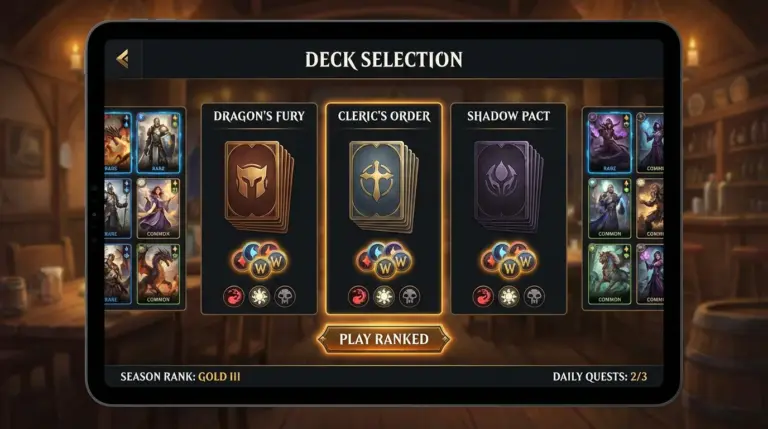

Looking for competitive MTG Arena decks? The meta moves fast, and keeping up with what’s actually winning requires good data sources. Whether you’re hunting for a Standard list to grind ranked or exploring Historic brews, these are the deck databases worth bookmarking.
Untapped.gg
Untapped has become the go-to tracker for Arena players, and their deck database benefits from that massive user base. We’re talking millions of tracked games, which means the win rates and meta percentages actually mean something statistically rather than being based on a few hundred matches.
The tier list updates frequently and breaks down performance by rank bracket. This matters more than people realize—a deck farming gold players might get demolished in mythic, and Untapped shows you the difference. You can filter by the ranks you actually care about rather than looking at aggregate data that mixes beginners with pros.
Draft coverage is where Untapped pulls ahead of constructed-focused sites. Card ratings based on actual pick and win rates beat any set review written before people played real games. If you’re splitting time between constructed and limited, having both under one roof is convenient.
The free tier works but feels limited. Premium unlocks the deeper analytics—personal performance breakdowns, advanced meta filters, detailed matchup data. Worth considering if you’re serious about climbing.
MTGGoldfish
MTGGoldfish covers paper and digital Magic, but their Arena format coverage is thorough. The real strength is historical tracking—you can watch a deck’s meta share rise and fall over weeks, which helps you spot trends before they’re obvious.
Tournament results hit the database quickly. When a list 5-0s or tops a challenge, it shows up fast. This makes Goldfish particularly useful right after set releases or bans when everyone’s scrambling to figure out the new meta. You see what’s actually performing rather than what Reddit thinks will be good.
The budget section deserves a look if you’re not drowning in wildcards. Most top decks have a cheaper version that swaps expensive mythics for reasonable alternatives. You lose some percentage points, but you keep most of the deck’s gameplan at a fraction of the cost. Solid way to test an archetype before committing.
Articles and guides add context the pure data sites lack. Understanding why a deck runs specific cards beats copying a list blindly.
Aetherhub
Aetherhub positions itself as a community platform, and the deck database reflects that. User submissions dominate, which means quality ranges from tournament-winning lists to unplayable jank. Telling them apart takes some experience.
The tier lists are editorially curated rather than purely algorithmic. Human judgment catches things data misses, but it also introduces bias and sometimes lags behind fast meta shifts. Treat the rankings as informed opinion rather than objective truth.
Comments and ratings add crowdsourced quality control. If a deck has a weird card choice or a fatal flaw, someone usually mentions it. This feedback layer helps surface the better lists from the noise.
The integrated deck builder makes iteration easy. Copy a list, tweak it on-site, save your version. Decent workflow for modifying existing archetypes rather than netdecking a list wholesale.
MTG Arena Zone
Arena Zone focuses exclusively on the digital client—no paper formats cluttering the database. Everything is Arena-relevant, from Standard through Historic and Timeless.
The editorial approach sets it apart. Decks come with actual guides explaining mulligans, matchups, sideboard plans. This context matters when you’re picking up an unfamiliar archetype rather than just jamming games hoping to figure it out eventually.
Tier list explanations go beyond rankings. Writers break down what makes a deck strong in the current meta and what punishes it. Helps you understand the why rather than just blindly following placements.
New player resources tie in well if you’re still building a collection. Craft guides, starter deck upgrades, wildcard optimization—all stuff that complements the deck content.
Moxfield
Moxfield is a deck builder first, but community sharing makes it useful for finding lists. Competitive players and content creators publish here regularly, and following the right accounts surfaces quality consistently.
Search and filtering are excellent. Find decks by format, colors, specific cards, author—whatever criteria you care about. Want every mythic-ranked Standard list running a particular card? Easy. This granular control helps when you’re looking for something specific.
No tracker integration means no automated win rate data. You’re trusting the poster’s reputation rather than verified results. Works fine for established names but makes evaluating random submissions harder.
Look for decks with written primers. A thorough explanation of card choices and matchup plans signals someone put actual thought into the build. Worth way more than a list dumped without context.
Streamers and Content Creators
Sometimes the best lists come from following players directly rather than browsing databases. Competitive streamers test extensively and iterate constantly—their current list is often more tuned than anything sitting in a database from last week.
Twitter/X remains where a lot of deck sharing happens in real time. Players post their latest builds after good runs, often with brief explanations of changes they made. Following a handful of grinders in your preferred format surfaces tech faster than waiting for aggregator sites to update.
YouTube deck guides offer the deepest context. Watching someone pilot a deck through multiple matches teaches you more than any written guide. You see the decision trees, the mulligan reasoning, the sideboard choices in real time. Time-intensive but effective if you’re serious about mastering a specific archetype.
Discord servers for competitive Magic often have deck discussion channels. The conversation format surfaces insights that don’t make it into formal guides—small tweaks, meta reads, card swaps for specific pockets of the ladder.
Making Sense of All This Data
Every site shows you winning decks. The differences are in data quality, interface, and context. But where you look matters less than how you interpret what you find.
Win rates need skepticism, especially at low sample sizes. A deck showing 58% might actually be 52% once you account for pilot skill. People playing weird brews tend to be better players who’d win with anything. Don’t expect to replicate someone else’s results by copying their 75.
Meta percentages tell you what you’ll face, not necessarily what to play. The “best deck” draws the most hate. Sometimes the tier two option that dodges the sideboard cards performs better in practice than the theoretical top choice.
Dates matter enormously. A dominant list from three weeks ago might be unplayable after a ban or new set drops. Always check when something was last updated. If it predates the most recent major meta shift, treat it as a starting point rather than gospel.
Your collection constrains you more than tier lists do. The optimal deck means nothing if you’re twelve rares short. Filter by wildcards required or cards owned—features most sites offer—rather than falling for something you can’t actually build.
Play style should factor in. The mathematically best deck might be grindy control, but if you hate long games, you’ll pilot it poorly and enjoy yourself less. A slightly weaker aggro deck that matches your instincts often outperforms a stronger build that fights how you naturally think about Magic.
Getting More From Whatever Site You Use
Most people use deck sites wrong. Grab list, import, queue, lose, repeat. A few extra minutes of reading changes that.
Check sideboard guides when they exist. Knowing what to board in and out for major matchups is a huge chunk of your best-of-three win rate. An unused sideboard is fifteen wasted cards.
Read comments and discussions. Other players share experiences, suggest changes, flag problems. Someone else already lost to the issue you’re about to discover—learn from them.
Track your own games. Aggregate site stats matter less than your personal matchup data. Maybe you crush control but fold to aggro. That should shape what you play and what you practice.
Update regularly. Metas shift weekly. A perfect 75 from a month ago probably needs changes. Follow active players rather than treating any list as permanent.
Make it yours. If a card consistently disappoints, try something else. Site lists are starting points. The best players tweak constantly based on what they’re facing.