
Aang, the Last Airbender: The Uncommon Bomb That Redefined Limited Play
When Magic: The Gathering | Avatar: The Last Airbender exploded onto the scene with its worldwide release on November 21, 2025, following prerelease events from November 14–20, players immediately recognized that this wasn’t just another Universes Beyond crossover set. Unlike the relatively subdued impact of the Spider-Man/Through the Omenpaths collaboration, Avatar crashed into both Standard and Limited formats like a comet, reshaping competitive landscapes and breathing new life into deck construction strategies that had grown stale over preceding months.
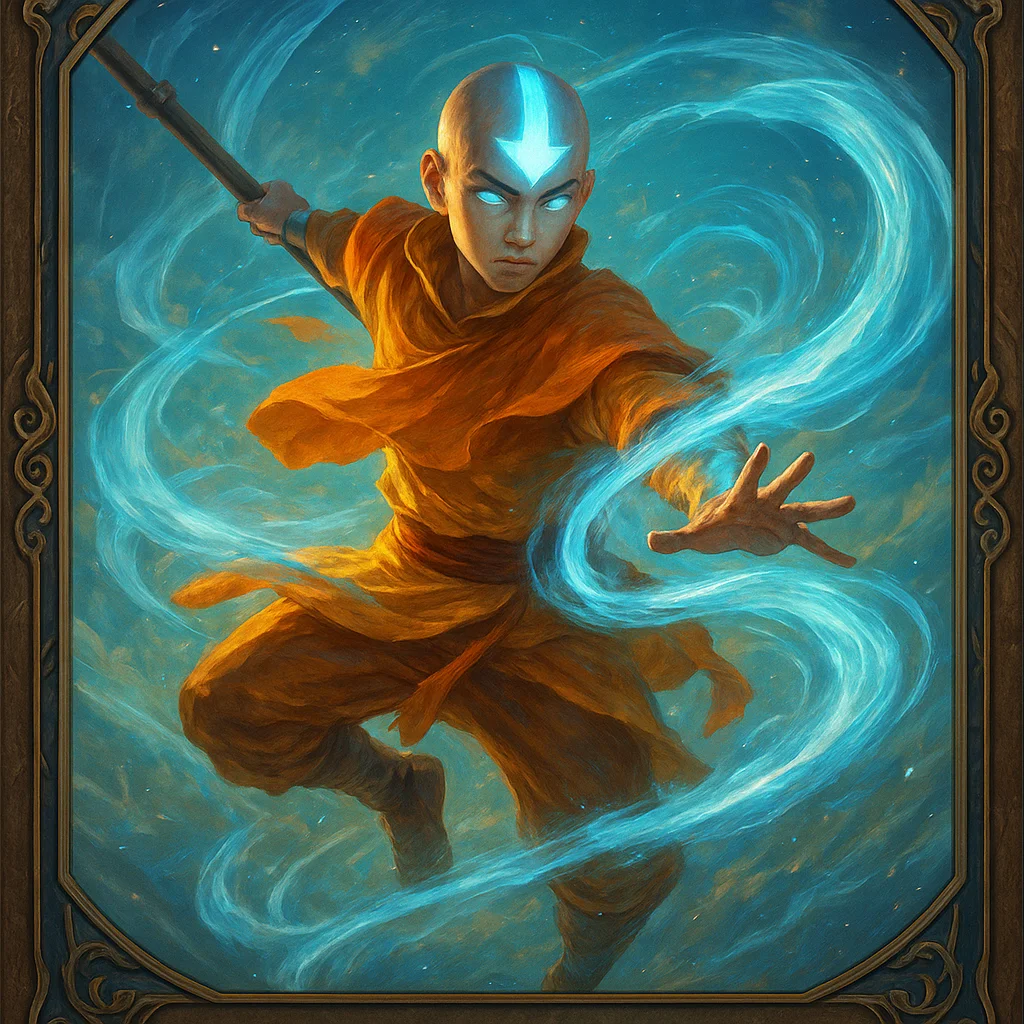
At the heart of this seismic shift sits an unassuming uncommon that perfectly captures the essence of its namesake character while delivering devastating performance in limited environments. Aang, the Last Airbender—the uncommon version, not to be confused with the mythic rare Avatar Aang that costs {R}{G}{W}{U}—has emerged as one of the fifteen best uncommons from the set’s impressive roster of 110 uncommons total, earning recognition as an ideal first-pick-first-pack selection that can anchor entire draft strategies.
Understanding the Airbending Advantage
What makes this particular version of Aang so explosively powerful becomes clear when examining its core mechanics. When Aang, the Last Airbender enters the battlefield, you can airbend up to one other target nonland permanent, sending it into exile where its owner can recast it by paying just {2} rather than its normal mana cost. This seemingly simple ability creates a cascade of strategic advantages that experienced limited players have learned to exploit with ruthless efficiency.
The airbending mechanic itself represents one of the set’s four signature keyword actions, each tied to the bending disciplines that define the Avatar universe. To airbend a permanent or spell means to exile it, and for as long as that card remains exiled, its owner may cast it from exile by paying {2}. This design choice brilliantly captures the temporary displacement and mobility that airbending represents in the source material while creating genuinely interesting gameplay decisions.
What elevates Aang from merely good to genuinely bomby territory is the versatility of targeting. As evaluators quickly noted, Aang effectively refunds via airbending while also being able to snipe Clues, tokens, and other permanents that opponents might not expect to see removed. Moreover, the lifelink aspect of this card provides a useful defensive bonus that can stabilize precarious board states, particularly when you’ve managed to include a couple of lesson cards to maximize value extraction.
The Limited Format Context
To fully appreciate Aang’s dominance, it’s essential to understand the broader limited environment into which he was released. The Avatar: The Last Airbender set comprises a staggering 394 cards total, with 81 commons forming the foundation of most draft decks. Limited enthusiasts typically categorize draft environments as either “Prince” or “Pauper” formats—Prince formats feature significant power differentials between rarities, while Pauper formats offer more balanced gameplay across commons and uncommons.
Avatar is so princely it might as well wear two crowns. There exists a massive delta between the numerous busted rares and mythics (60 rares at 85.7% and 20 mythic rares at 14.3%) versus a relatively tame suite of commons. Current Avatar statistics reveal seven cards performing at a 65% win rate or better, which indicates exceptionally strong cards, with another 29 cards sitting between the 60-65% threshold that includes the best uncommons in the set.
This top-heavy power distribution means that securing premium uncommons like Aang becomes absolutely critical for competitive success. When bombs are this prevalent at higher rarities, having access to uncommon-tier cards that can compete with or answer those threats determines whether you’re competing for trophies or scrubbing out in the early rounds.
Synergies and Lesson Integration
The designers at Wizards of the Coast demonstrated remarkable foresight when they brought back the lesson subtype for this set. Lesson doesn’t inherently carry special meaning—it’s simply a subtype that appears on some instants and sorceries, allowing other cards to find and interact with them. However, when paired with Aang’s airbending ability, lessons become significantly more valuable than they might appear in isolation.
By including a couple of lessons in your deck, you create additional triggers and synergies that amplify Aang’s already considerable value. The airbending ability can target your own permanents, allowing you to rebuy enters-the-battlefield effects for just two mana—an extraordinarily efficient rate that compounds over multiple turns. This self-targeting flexibility transforms Aang from a purely defensive tempo play into an engine that generates incremental advantage while your opponent struggles to develop their own board presence.
Furthermore, the Ally creature type that appears throughout the set creates natural synergistic packages. As the design team explained, Avatar: The Last Airbender is fundamentally about Aang and his allies, with several cards caring about the number of Allies you control or Allies entering the battlefield. Aang himself carries the Ally type, slotting seamlessly into these tribal strategies while offering utility that transcends pure tribal payoffs.
Color Identity and Archetype Placement
One of Aang’s greatest strengths in limited play stems from his flexible color requirements and natural home in multiple archetypes. The White-Blue (WU) archetype, in particular, received significant support from the set, and while that color pair does feature two mega bombs in the form of Aang, Swift Savior and Katara, Water Tribe’s Hope—both windmill slam first-picks good enough to splash in other archetypes—the uncommon Aang provides a more realistic chase uncommon that players can reasonably expect to see during their draft.
The white-blue pairing naturally supports the bounce-and-replay patterns that Aang enables. Cards like Invasion Submersible, described as “Man-o’-War but it’s a 3/3 that enters tapped” with the ability to bounce nonland permanents including your own, create devastating sequences when combined with Aang’s airbending. The Submersible can even tap itself for waterbending despite entering tapped, making it exceptionally easy to extract value from enters-the-battlefield abilities.
This synergy web extends beyond simple two-card combinations. The set’s emphasis on bending mechanics—firebending (which always includes a number and generates that much red mana when creatures with firebending attack), waterbending, earthbending, and airbending—creates layers of interaction that reward players who draft cohesive strategies rather than simply jamming the highest individual card quality.
Standard Impact and Constructed Considerations
While Aang, the Last Airbender shines brightest in limited environments, the broader impact of the Avatar set on Standard cannot be ignored when evaluating any card from this release. The set has reshaped Standard overnight, with Izzet Lessons—filled with commons and uncommons from the set—emerging as the breakout deck at Magic World Championship 31. This meta upheaval demonstrates that uncommons from this set carry genuine competitive relevance beyond the draft table.
Cards like Appa, Steadfast Guardian have become automatic inclusions in BWx bounce decks, providing recurring threats that reuse enchantments, develop the board, and provide massive bodies all at once. Appa offers an extremely powerful effect in Standard, working well both offensively and defensively by allowing you to reuse enters-the-battlefield effects for just two mana—effectively doubling the value of your creatures. This mechanic mirrors what Aang accomplishes in limited, suggesting that the airbending mechanic represents genuinely pushed design rather than limited-only filler.
Moreover, combo decks have emerged that abuse airbending mechanics to devastating effect. Bant Airbending Allies leverages Doc Aurlock, Grizzled Genius, who effectively makes all airbended cards free. When combined with Appa, Steadfast Guardian and any airbending card, the deck can create infinite 1/1 tokens—a turn-three kill combo that has raised eyebrows throughout the competitive community. While Aang himself doesn’t slot directly into these degenerate strategies, his existence in the set demonstrates the power level that Wizards was willing to push with the airbending mechanic.
Design Philosophy and Character Representation
The design team faced unique challenges when translating Avatar: The Last Airbender’s characters into Magic cards. As lead designer discussions revealed, the team and Avatar Studios identified a core cast of seven characters: Aang, Katara, Azula, Zuko, Toph, Iroh, and Sokka. To highlight these characters properly, the design team created three versions of each to align with the three books (or seasons) of the show, which comprised a total of 61 episodes. Having each character pick up additional colors over time helped convey their growth across the series.
Interestingly, the final design for the uncommon Aang feels remarkably resonant because it sends players on a quest similar to Aang’s own journey. To maximize value from cards that care about bending, you must track down benders from all four nations and gather them together as a team, just as Aang did throughout the series. This design philosophy—capturing not literal abilities but emotional journeys—resulted in cards that feel authentic to their source material while functioning as compelling Magic cards.
The uncommon Aang specifically captures the character during his early journey: capable and helpful, but not yet the fully realized Avatar. This positioning makes perfect sense from both a power-level perspective (reserving the most explosive abilities for mythic rare Avatar Aang, the 4/4 that transforms into a 6/6 Aang, Master of Elements with utterly game-ending abilities) and a flavor perspective.
Evaluating Bomb Status
The term “bomb” gets thrown around frequently in limited discussions, but what precisely qualifies Aang, the Last Airbender for this designation? Several factors contribute to this classification beyond mere win-rate statistics.
First, Aang passes the vanilla test while offering substantial upside. Even if you never get value from the airbending trigger—perhaps because you drew him late when your hand was empty—you still receive a reasonable body with lifelink that can trade or stabilize. This floor prevents Aang from being a dead draw in unfavorable situations, an important quality for cards seeking bomb status.
Second, Aang generates immediate value upon entering the battlefield. Unlike cards that require you to untap with them or wait for combat steps, Aang’s enters-the-battlefield trigger resolves immediately, making him resistant to removal-heavy opponents who might otherwise prevent you from extracting value.
Third, and perhaps most importantly, Aang creates compounding advantages when left unanswered. Each turn he remains on the battlefield represents another potential airbending trigger, another lifelink attack, and another permanent your opponent must account for in combat mathematics. This snowball potential separates genuine bombs from merely good cards.
Comparative Analysis Within the Set
When positioned against other uncommons from the 110-card uncommon roster, Aang earns his place among the fifteen best through consistent performance across diverse deck archetypes. Cards like Badgermole Cub, which has emerged as one of the set’s clear standouts, offer different strategic advantages—in that case, raw efficiency and board presence—while Aang provides flexibility and synergy potential.
The evaluators who praised Aang noted that “I’m glad Avatar made its main character good!” This statement carries weight beyond simple flavor appreciation. In licensed sets, there exists perpetual tension between honoring the source material’s most important characters and maintaining proper power-level distribution for gameplay purposes. Successfully delivering a main character who performs well without completely warping the format represents a significant design achievement.
Furthermore, Aang’s performance improves dramatically when players draft around him rather than simply slamming him into any deck. This quality actually strengthens his bomb credentials rather than weakening them—true format all-stars reward mastery and deck construction skill while remaining accessible enough for intermediate players to extract baseline value.
Availability and Product Considerations
Players seeking to acquire Aang, the Last Airbender for limited play have multiple pathways, given the set’s comprehensive product line. Play Boosters contain cards from TLA 1–358 and TLE 1–61, with 1–4 cards of rarity rare or higher (2 rares: 27%; 3 rares: 2%; 4 rares: <1%), 3–5 uncommon cards, 6–9 common cards, and 1 land card (replaced by traditional foil land in 20% of boosters). One card of any rarity appears as traditional foil.
This distribution means that in a typical draft pod, multiple copies of Aang will likely appear across the seated players, though the uncommon rarity prevents him from warping every single draft. The set officially debuted on Magic Online on November 18 at 10 a.m. Pacific time, giving digital players access slightly ahead of the paper worldwide release, allowing for rapid data collection on card performance.
Additionally, the set features spectacular Booster Fun treatments that unite Magic’s special card frames with Avatar: The Last Airbender’s distinctive visual style. Battle pose cards draw inspiration from the original series’s intro sequence, capturing characters as they prepare to face their foes. Partner Source Material Cards feature actual show screencaps, complete with episode references in the bottom corner—61 in total, one for each episode—creating a dream scenario for completionist collectors. While these treatments don’t affect gameplay, they enhance the emotional connection players feel toward their cards.
Meta Evolution and Future Considerations
As of January 2026, roughly two months after the set’s release, the metagame continues to evolve around Avatar’s considerable impact. Community reception has been overwhelmingly positive, with analysts noting that “no matter which nation you pledge allegiance to, there’s something exciting to explore in Avatar Standard. The meta feels more alive than it has in years.” While some express concern that combo decks might eventually dominate, the high synergy requirements foster brewing, adaptation, and innovation—precisely what Standard had been missing.
This vitality extends to limited formats as well. Arena statistics provide real-time feedback on card performance, allowing players to refine their evaluations based on empirical data rather than pure theory. As players continue mastering the format’s nuances, cards like Aang may rise or fall in pick priority, though his fundamental strengths suggest he’ll remain a premium uncommon throughout the set’s limited lifespan.
The set’s legality across multiple formats also matters for Aang’s long-term relevance. At release, Magic: The Gathering | Avatar: The Last Airbender became legal in Standard alongside Magic: The Gathering Foundations, Wilds of Eldraine, The Lost Caverns of Ixalan, Murders at Karlov Manor, Outlaws of Thunder Junction, The Big Score, Bloomburrow, Duskmourn: House of Horror, Aetherdrift, Tarkir: Dragonstorm, Magic: The Gathering—FINAL FANTASY™, Edge of Eternities, and Magic: The Gathering | Marvel’s Spider-Man. This extensive legal card pool means that even if Aang doesn’t break into tier-one constructed play, he’ll remain draftable and playable for the foreseeable future.
Practical Drafting Advice
For players sitting down to draft Avatar: The Last Airbender, recognizing Aang, the Last Airbender as a first-pick-quality uncommon should inform your entire draft strategy. If you open or are passed Aang in pack one, you’ve received a clear signal that white-blue or white-based strategies are potentially available. However, don’t force the archetype if subsequent packs don’t support it—Aang’s airbending ability works with any permanents, making him splashable and flexible even if you pivot to different colors.
During deck construction, actively seek lesson cards and enters-the-battlefield effects that synergize with Aang’s airbending. Cards that generate value when they enter play become significantly better when you can rebuy them for just two mana. Similarly, prioritize removal spells that can protect Aang once he’s on the battlefield, as his compounding value makes him a priority removal target for informed opponents.
In gameplay, sequence your spells carefully to maximize Aang’s impact. Sometimes the correct play involves airbending your own permanent to rebuy an enters-the-battlefield trigger, while other situations call for exiling an opponent’s key permanent to disrupt their tempo. The two-mana recast cost matters significantly—opponents regaining access to airbended permanents earlier than expected can shift game dynamics, so factor this timing into your strategic calculus.
Conclusion: A Bomb That Delivers
Ultimately, Aang, the Last Airbender represents everything players hope for when evaluating uncommons in premier sets. He delivers immediate value, creates compounding advantages, fits naturally into multiple archetypes, synergizes with broader set mechanics, and captures the essence of his source material character. The fact that evaluators felt compelled to note their happiness that Avatar made its main character genuinely good speaks to the card’s success on both mechanical and flavor levels.
In a set overflowing with powerful cards—where Avatar Aang the mythic rare can transform into a 6/6 that makes spells cost {W}{U}{B}{R}{G} less while drawing four cards, gaining four life, adding four +1/+1 counters, and dealing four damage to each opponent—the uncommon version holds his own by offering accessible power at a rarity that most players will actually encounter during their limited experiences.
Whether you’re grinding Magic Online queues, battling in Friday Night Magic paper drafts, or preparing for competitive limited events, recognizing Aang, the Last Airbender as the uncommon bomb he truly is will improve your draft performance and win rate. Just as the character united the four nations in the animated series, this uncommon unites flexibility, power, and synergy into a single package that defines what limited all-stars should accomplish.