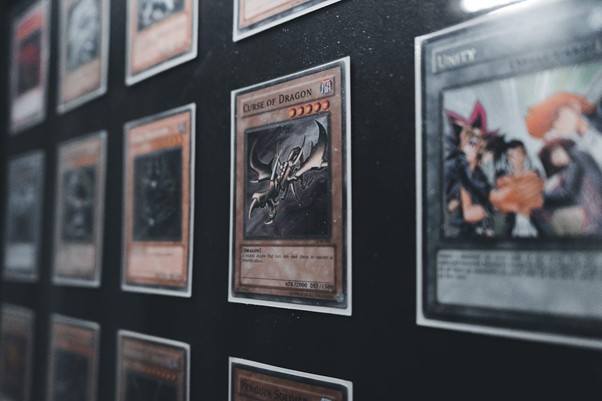

MTG is the most popular collectible card game, and while this type of game is rather unique, MTG players do develop skills they can use in other games. These skills are related to the underlying attributes that MTG shares with games of different types and genres.
1. Understanding probability
MTG is a strategy game; this cannot be denied, but luck still plays a certain role in winning. A newcomer will occasionally beat an experienced player if their cards line up correctly. The trick to winning in the long run is to set up a deck that makes probability work in your favor.
Understanding probability is an invaluable skill for playing casino games, and there are multiple sides to it.
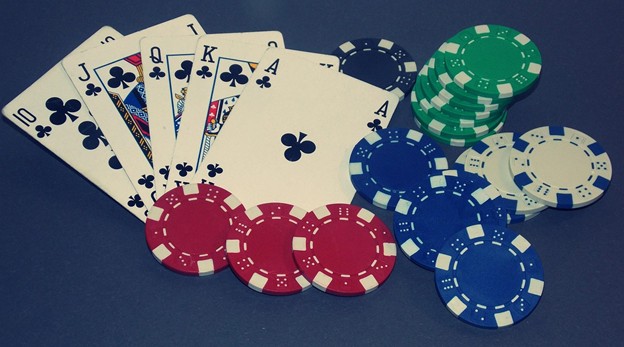
Calculating the probability of completing a certain hand is a skill that translates incredibly well to poker. While MTG and poker have numerous differences, the bottom line is that in both games, you win by having a strong hand.
Another aspect of knowing how probability works is understanding that an approach to playing is preferable in the long run, even if it does not bring spectacular wins. This is why casino games with a high return to player (RTP) are preferable to those with high potential wins with a very low probability. As Robbie Purves explains, the best payout online casinos have a greater number of high RTP games than their competitors, along with substantial bonuses, simple payout methods, and other benefits.
Lastly, players who understand probability do not succumb to the gambler’s fallacy. Just because the roulette ball landed on red the past ten times does not make it more likely to land on black the next time.
2. Strategic thinking
Despite the role luck plays, and as has already been said, MTG is a strategy game, and regardless of their differences, all strategy games require players to think in fundamentally the same way, whether they are card games, board games, or video games.
First, you are thinking in terms of strategies, i.e., long-term plans for winning the game. In MTG, your long-term plan is to create a hand of specific mutually synergistic cards. In chess, your plan might be to create a cluttered board while eliminating your opponent’s knights. In StarCraft, you might try to hatch six zerglings as soon as possible in an attempt to attack your opponent unprepared. All these examples require the same mode of thinking, which is creating a broad plan for attaining victory.
You are also thinking in terms of tactics. These are short-term moves for achieving a specific purpose, and are incorporated into the overarching plan. An example of a tactic in chess is a fork, where you attack two of the opponent’s pieces in one move, making them unable to save both. A simple tactic in Warcraft III is countering your opponent’s spellcasters with Spell Breakers.
Finally, in all strategy games, you are thinking in terms of conditional statements, i.e., if your opponent performs move A, you will perform move B, and so on.
3. Reading your opponent
Those who play paper MTG at serious tournaments encounter an additional layer of the game, which is the psychological contest. Body language can give away a lot about the cards someone has. This includes the way they draw their cards, hold their cards, how they are sitting in their seat, and the pace at which they play. If a player has been playing slowly and deliberately, and then proceeds to swiftly perform an attack after having drawn a card, their opponent can conclude that the drawn card is a significant one.
Paper MTG players need to learn both how to read their opponent’s body language and how to minimize information bleed themselves.
The most notable game where this skill can be applied is poker, which relies heavily on reading opponents, maintaining a poker face, and bluffing. Bluffing is also present in MTG, although to a lesser extent.
There are other games as well where this skill can be put to use. A noteworthy example is a category of party games called social deduction games. While not nearly as competitive as MTG or poker, these games are entirely based on a psychological contest. In a social deduction game, players need to uncover each other’s team allegiance through conversation and deductive reasoning.
Lastly, reading one’s opponent is useful to a degree in any strategy game, even if there are no hidden variables.
4. Controlling your emotions
This is a skill MTG players develop because of the luck factor present in the game. Even if you play perfectly, your opponent might gain the upper hand because of luck, and this might occasionally even cost you the game. Becoming disadvantaged due to an external factor, not under your control, can cause frustration and ultimately lead to making poor decisions. MTG players learn to distinguish bad luck from bad play and stay cool-headed in these situations.
Once again, poker is the game where this skill is most applicable. There is a lot of talk in poker about tilt, which is a state of excessive frustration caused by bad luck disguised as a lack of skill on the player’s part. Poker players put a lot of effort into reducing tilt, and MTG players would be well-equipped to handle this issue.
Controlling your emotions when faced with a hindrance beyond your control is a skill that is also useful in life in general. Many factors influence our lives that are out of our hands, and we must learn to stay calm and keep trying when confronted with aggravating situations.
Wrapping up
MTG is a strategy game with an element of luck and hidden variables. These attributes determine which games MTG skills are most transferable to. Poker seems to be the most similar game, but MTG skills are also applicable in many other games, as well, and even in life outside of gaming.