
If you’ve played poker before, you’ve probably heard the term “the flop” thrown around. It’s a key part of many poker games, especially popular variants like Texas Hold’em and Omaha. But what exactly is the flop, and why does it matter so much? We’ll break it down in simple terms in this guide. Read on for more details.
What is The Flop?
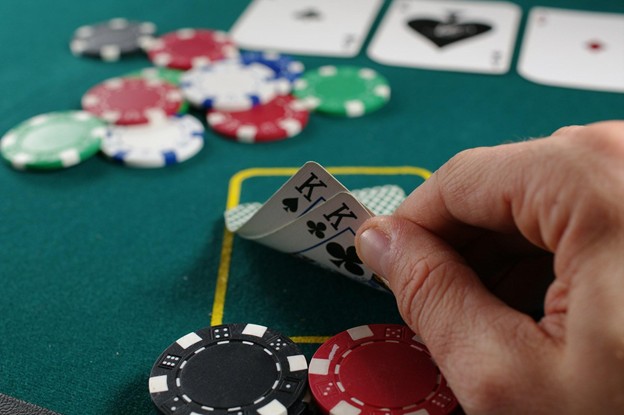
The term flop is used in games like Texas Hold’em and Omaha. It indicates the first three cards which are dealt face-up on the table as community cards. Players will combine these cards with their hole cards to form the best possible five-card poker hand.
To put it simpler, after a round of betting pre-flop, the dealer will place three cards face-up in the middle of the table. That’s what is referred to as ‘the flop’.
Where Does The Name “The Flop” Come From?
Like many other things within poker, “the flop” also has its own story. Most people tend to lean towards it being associated with the sound that is produced when the card is placed on the table. The old-schoolers would claim that there is a light slap “flop” sound when it is placed down. Whether or not that’s true, the name stuck, and now it’s part of everyday poker lingo.
Who Bets First After The Flop?
Once the flop is revealed, the first betting round of the post-flop action begins. The player closest to the left of the dealer button (who is still in the hand) acts first. This continues clockwise around the table.
In Texas Hold’em and Omaha, the structure stays consistent: pre-flop betting starts to the left of the big blind, but after the flop (and on the turn and river), betting starts with the first active player to the left of the dealer.
Do All Poker Variants Have The Flop?
Not all poker games involve a flop. The flop is part of community card poker games, where players share common cards on the table. Texas Hold’em and Omaha are the two most famous examples.
Other poker formats like Seven Card Stud or Draw Poker don’t have a flop at all. In those games, each player has individual cards, and there are no shared community cards revealed like in flop-based games.
Can You Raise Before The Flop?
This is actually one of the most important stages of a hand. Before the flop is dealt, there’s a pre-flop betting round, starting with the player to the left of the big blind. You can fold, call the big blind, or raise. A strong pre-flop raise can knock weaker hands out early, build the pot, or put pressure on your opponent’s right from the start.
Pre-Flop Strategy Tips
If you want to improve your game when playing poker at OMG Casino and other gaming sites, pre-flop strategy is where you need to start. Here are a few quick tips:
Play Tight from Early Position
Play fewer hands while you’re sitting early in the betting sequence. Stick to powerful opening hands, such as high-suited connectors (such as A-K suited) or huge pairs (such as Aces, Kings, and Queens). It’s riskier to play with weak cards because more players will be imitating you.
Adjust Based on Table Dynamics
If everyone is acting really loose and jumping all the time, you can become more rigid. However, ifno one is raising and the table is passive, you can take more chances and witness more failures.
Know When to Raise or Fold
Avoid limping too much with weak hands and simply call the huge blind. Usually, it’s preferable to fold or raise. A raise might put players on the defensive and give you control of the hand.
Use Position to Your Advantage
You have more options and knowledge when you are “in position,” or acting later in the hand. It is easier to steal pots with well-timed raises and play more hands when you are on or close to the button.
Final Thoughts
Once you know how the flop works in poker, you’re well on your way to becoming a better player. Learn the basics to improve your strategy and play more confidently. You can also use our shared tips to improve your strategies.