
Over centuries, card games have moved from local traditions to shared cultural symbols, adapting to new ideas, technologies, and styles of competition without losing their power to unite the world.
Their strength comes from how naturally they fit into different ways of thinking without losing what makes them interesting. Players recognize the same tension in every good game—the feeling that every move could change everything, even when luck is involved.
A Common Thread Across Cultures
No matter where you look, the basic idea behind card and tile games remains surprisingly constant: a blend of randomness and strategy designed to test both skill and adaptability. In places where language and custom might differ, the shared logic of gameplay becomes a way to build instant connection.
That feeling is even sharper today, where players can jump into a game within seconds and test their instincts without needing anything more than a screen. The rise of Mahjong online makes it possible to experience the same fast decisions, quiet strategies, and sudden risks that once played out slowly around a table, but now at a pace that fits modern life.
Behind the fast moves of today’s games is a long history of matches where waiting, reading, and slow shifts decided who won.
Mahjong Through Space and Time
Its roots trace back to 19th-century China, where it developed as a close, community-powered game that relied as much on observation and timing as it did on understanding opponents. As it moved beyond family tables and local gatherings, the game slowly absorbed regional differences, traveling further with migration and cultural exchange until it became a fixture in many parts of the world.
What began as a tightly woven tradition adapted carefully to new audiences and technologies, but never lost the competitive tension that made it worth playing.
Magic: The Gathering and the Evolution of Strategic Play
When Magic: The Gathering appeared in the early 1990s, it shifted the expectations around card games by adding layers of preparation and long-term planning that began before the first card was even played.
Instead of giving every player the same tools and leaving the outcome to in-game tactics alone, MTG demanded that strategy start much earlier. Building a deck meant making tough decisions about strengths, weaknesses, and how to handle uncertainty before a single move happened.
Players learned that controlling what was possible mattered more than reacting to what had already happened.
Luck Versus Memory: Different Paths to the Same Challenge
At their core, both Mahjong and Magic force players to live with incomplete information, but what matters is not how uncertain the situation feels — it is how the player shapes the next few moves anyway.
The strongest players are rarely the ones waiting for a perfect opportunity; they are the ones who can work with what little they have, shifting momentum slowly or forcing it sharply depending on what the moment demands.
The ability to move without full control is what separates quick wins from lasting skill.
The Rituals That Build Real Communities Around Play
Long before a match begins, players often step into a world that feels familiar, even if they have never sat at that particular table before. In Mahjong, the way tiles are shuffled, seats are taken, and hands are played says as much about the players as the tiles themselves.
Magic: The Gathering grew its own version of this—routines before the first draw, small signals exchanged before the match begins—habits that create a shared understanding without a word being spoken. It is these quiet rituals, not just the rules, that turn games into lasting communities.
A new player joining a table in Singapore or a first-timer at a Magic tournament in France steps into a living system—one where behavior, rhythm, and small traditions create connection faster than conversation ever could.
Adapting to Modern Technology Without Losing Tradition
Surely one of the most striking aspects of both Mahjong and Magic is how they have adapted to the new world without losing their identity. Online Mahjong keeps the tile-based mechanics intact, offering speedier matchmaking and more accessible learning tools, but it still demands the same pattern recognition and timing skills that physical play always required.
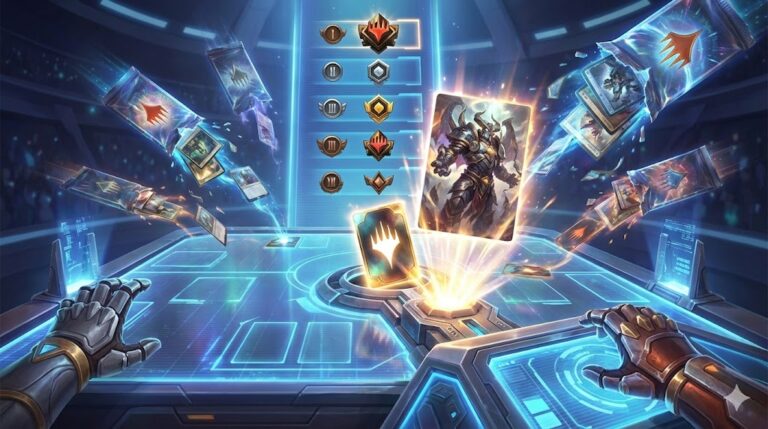
Magic: The Gathering’s digital platforms, like MTG Arena, mirror the physical game’s complexity almost exactly, even adding features like visual prompts and automated rule enforcement to lower the entry barrier for new players. At the same time, they keep what mattered most: the feeling that every choice, from building a deck to bluffing an opponent, carries weight.
The way these games have evolved shows that tradition does not need to stand still to survive. By holding onto the tension and decision-making that made them worth playing in the first place, they have found new ways to stay alive without losing their original spirit.
The Future of Strategy and Culture in Play
The next stage of card and tile games will not be about preserving old systems exactly as they were, but about how players reinterpret them in new contexts. Already, mechanics once tied to specific traditions—like Mahjong’s concealed information or Magic’s pre-game deck-building—have spread into new genres that push players to think differently.
Tactical games borrow layered uncertainty from tile-based play; strategic card games build long arcs of decision-making drawn from tournament formats. What survives is not just the structure of a game, but the way it teaches players to plan, adapt, and respond under pressure.
As these ideas cross cultures more freely, what matters most is not whether a game looks traditional or modern, but whether it keeps asking players to do what has always made games powerful: making tough choices in uncertain conditions, reading others, and shaping meaning from conflict.
That core remains recognizable whether it happens over a hand-built wooden table or through a match played across continents on a screen.