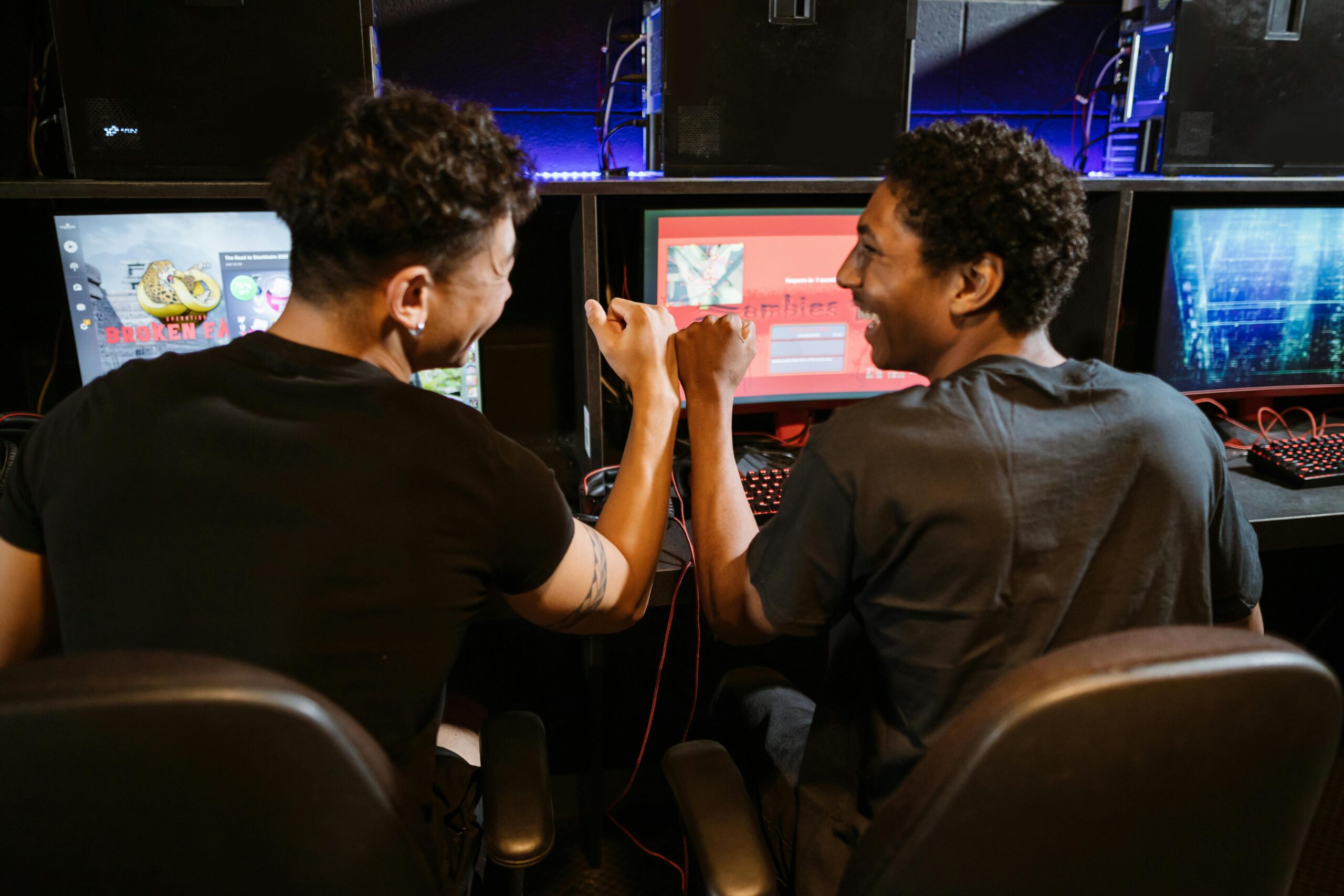

Gameplay was characterized by traditional consoles for decades, with physical or digital game libraries and predetermined generational cycles that influenced how players consumed and played games. In recent years, cloud gaming has become a serious challenger to many decades-old assumptions regarding ownership, performance, and accessibility. With the two models still developing, a major question in the industry is which will shape gaming in the future. A question we are seeking an answer to.
The Enduring Strength of Traditional Consoles
Conventional console gaming does not lose its leading position without a reason. Consoles provide consistent performance, low latency, and a tightly managed ecosystem that is optimized for gaming. Players also appreciate the stability of local hardware, particularly in genres such as competitive shooters, fighting games, and sports games, where speed is critical.
There is also consumer confidence in consoles. Players are aware of what they are purchasing, their hardware lifespan, and what type of experience they will have. Offline gameplay, the right to own installed games, and independence from internet instability remain important, especially in areas where high-speed connections are unreliable or costly. For many, consoles remain the most reliable way to play high-quality games.
Cloud Gaming’s Promise of Accessibility
Cloud gaming examines the issue from a fundamentally different perspective. In addition to using powerful local hardware, it transmits games to remote servers and distributes the processing load to the cloud. This model will significantly reduce the barrier to entry. A game device can be a smartphone, a tablet, a low-end laptop, or a smart TV at very little cost.
The blandishness is in comfort. No downloads, no patches and no storage restrictions. Players can enter games at any time and seamlessly transfer across devices. This is comparable to the wider digital consumption patterns, in which access has come to be more prized than ownership. Cloud gaming provides a convenient point of access for new players and casual consumers to experiences that were previously costly to purchase.
Performance, Latency, and Infrastructure Realities
Cloud gaming, however, has not removed the technical barriers as promised. The major obstacle is still latency. Delays, even minor ones, can cause inconvenience during gameplay, especially in competitive or reaction-based games. Visual fidelity can also be affected by image compression and variable network quality, which can make the experience less consistent than local play.
That said, infrastructure is improving rapidly. Latency is being brought down and reliability is being enhanced by fiber broadband, 5G networks, and edge computing. Cloud gaming performance is becoming increasingly similar as these technologies mature. Whether cloud gaming is viable is no longer in question; rather, the question is how effective it can be on a global, consistent scale.
Business Models and Platform Strategy
The discussion of cloud versus console does not concern technology alone but also business models. The classical consoles are strictly dependent on hardware sales, monopolistic titles, and a long upgrade cycle. Cloud gaming puts subscriptions, ecosystems of services and recurring revenue at the center stage.
Moreover, this change is consistent with the trends in digital entertainment. Customers demand accessibility across various platforms for streaming games, watching videos, and choosing where to play at legitimate real money casino sites. These frictionless access and cross-device continuity motivate more thought in both instances than manual possession.
To platform holders, cloud gaming provides more data, rapid development and a wider scope. To players, it brings in issues of access in the long term, content availability and reliance on service providers.
Player Psychology and the Question of Ownership
Psychological factors are among the most significant distinctions between cloud gaming and traditional consoles. Console players often feel that they own their libraries, hardware, and saved data. Cloud gaming alters this relationship, in which ownership is replaced by licensed access.
This change is not received uniformly. Other players fear being deprived of access to games in the event of service closure or the lapse of a licence. Some do not like the notion of being constantly connected to achieve a full gaming experience. These issues are causing sluggish adoption, particularly among core gamers who treasure control and permanence.
Meanwhile, younger viewers who have grown up with streaming services perceive access-based models as the default. Being convenient is more of a consideration than owing to them, suggesting there is likely a generational gap that will determine how they adapt in the future.
The Likely Future – Coexistence, Not Replacement
It will not be that gaming will either be completely substituted by the other model in the future; rather, there will also be coexistence. The classic consoles will continue to satisfy the needs of classic players who prioritize performance, offline internet access, and hardware ownership. Cloud gaming will expand the user base, including users who value flexibility, affordability, and instant access.
Hybrid strategies are already emerging. Consoles have cloud capabilities, and cloud platforms are empowering peripherals and local additions. The result of this convergence is the blurring of the boundary between the two models and the fact that the distinction is less about hardware than about how players choose to engage.
Where the Industry Is Headed
The future of gaming does not lie in a single place; it spans a spectrum of experiences. Cloud gaming symbolizes growth and accessibility, whereas conventional consoles emphasize performance and stability. The two models will change as both infrastructure improves and players’ expectations evolve, with each model gaining strength at the expense of the other.
Over time, the victors will be those platforms that allow player choice. Gaming will be done via a console in front of the television or via a stream on a phone, but the key will be easy access to high-quality gaming. The future is not cloud or console. It is a gaming ecosystem in which both can co-exist.