
Several games have been proven to offer players much more than leisure and entertainment. Depending on the particular game and its specifics, players gain quite a few advantages from regular gameplay, learning skills, and strategies that can be extrapolated and transferred into real-life situations. This is true of most games, including versus, adventure, and card games like Magic: The Gathering (MTG).
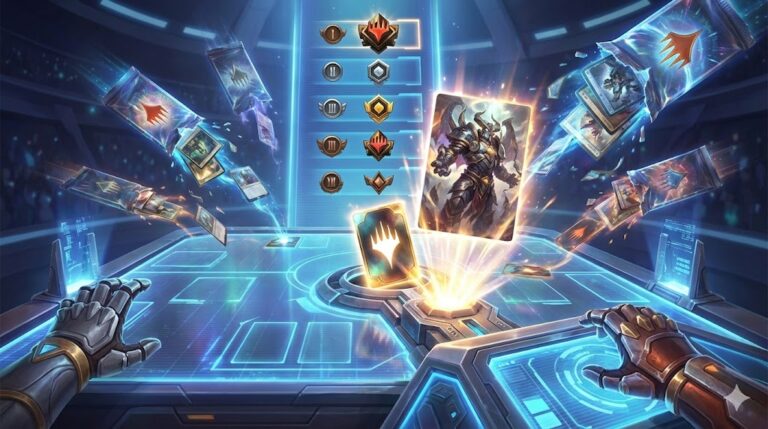
MTG is a collectible card game with an extensive fantasy universe that requires unique gameplay that helps players learn a variety of life skills. Originally launched in 1993, the game is generally considered the first-ever trading card game and boasts about 50 million players as of February 2023. According to reports, the game’s annual revenue crossed $1 billion as of the 2022 fiscal year, with more than 20 billion cards produced from 2008 to 2016.
MTG players acquire valuable life skills similar to those learned by casino players. Like MTG, the casino provides a platform for people to learn critical thinking and strategy while making careful decisions under pressure. Players learning these skills can find an option on NewSweepCasinos where casino games are available without the risk of financial loss. Using virtual game currency, players can learn valuable skills and try out strategies that can be used within and outside the game.
Playing MTG
The standard MTG game begins with at least two players battling each other. While there may be more players, a versus game is more common. The gameplay starts with 60 or more cards, with players having 20 life points. The goal here is to gradually reduce an opponent’s number of life points by making strategic gameplay decisions. The game ends when a player’s life total is depleted, they run out of cards, or specific circumstances happen – such as a draw or when a player’s library has at least 200 cards at the start of their upkeep.
What Life Skills Does MTG Teach?
Patience and Emotional Control
The best MTG players have mastered the art of patience and understand how to make careful decisions. Throughout the game, players face bad draws and several losses especially if their opponent is skilled. Losing players must learn to keep their emotions under control to avoid more losses.
The best players learn how to remain calm under pressure, which helps them to handle real-life situations, whether at work or home. The amount of emotional resilience required to become an MTG expert translates to everyday life and can be helpful with business dealings that involve a lot of negotiations.
Risk Assessment
Nearly every MTG move exposes the player to some level of risk. Minimizing this risk requires players to carefully perform risk analysis multiple times to ensure that each play is going in the right direction, which can help the player move closer to a win. The level of risk assessment and probability analysis required while playing MTG can be used to make decisions in real life. Specifically, the game teaches players how to perform a quick risk assessment and analysis using available data instead of going by sentimental nudging.
Critical Thinking and Problem Solving
Perhaps the most valuable skill MTG teaches is critical thinking. At each turn, players must assess their available resources and consider the opponent’s most likely move before making a final decision. Each participant playing MTG has to learn logical reasoning and pattern recognition and apply these skills at multiple points during the game.
Learning whether to immediately use available resources to destroy a minor threat or wait for a more potent card enhances critical thinking. In addition, anticipating an opponent’s move helps to manage resources so that switching gaming strategy from offense to defense can be done quickly without significant risk.
All of these are problem-solving skills that help with decision-making. If you can predict your opponent’s move and create an efficient strategy around it, decision-making in high-pressure situations becomes easier for you.
Creativity
In a sense, possibilities in the average MTG game are endless. Since the game usually introduces new cards and gaming options, players must learn to build decks, create unique strategies, and also find innovative ways to handle gameplay. Even after deciding whether to attack or defend, players must create unique combinations and consistently think of new ways to outsmart their opponents.
This level of creativity also contributes to problem-solving, especially if your average personal or work life requires you to tackle complex situations. The creativity needed to become an expert MTG player also contributes to artistic efforts and tech troubleshooting, teaching players how to think outside the box and adapt to everyday challenges.
Competitive Drive
MTG is a game that makes players very competitive. Whether trying to win a local tournament, playing to be included in a major event, or simply enjoying the game among friends, players must consistently set goals and defeat opponents to improve their gameplay.
Learning to set goals is essential to all career growth and personal development. MTG helps players learn how to break down these goals into smaller actionable steps that gradually guarantee success as long as there is consistency.
Social Skills
MTG offers players a strong social experience despite its deeply competitive nature. Players join communities to discuss, form strategies, and interact with opponents. This aids in maintaining sportsmanship during and after high-stakes games.
Furthermore, playing MTG helps to foster interpersonal skills like persuasion and negotiation. During multiplayer games, creating and maintaining alliances can play an essential role in helping players succeed. A major part of this is knowing how to read and understand people and interpret body language. These skills are valuable in personal and professional situations.
Attention to Detail
Since MTG comprises complex interactions and several thousand cards, players learn attention to detail because they must properly understand each card. Small mistakes can be detrimental to a player’s strategy and cause them to lose their game. In real life, this skill translates to any professional endeavor where large amounts of information must be understood and processed accurately. This is true of most professional and academic settings.
Conclusion
Magic: The Gathering is much more than a card game as it helps players develop real-world skills that improve their personal and professional lives. The game improves everything from resource management to critical thinking, making players more strategic, adaptable, and thoughtful. Regardless of the aim, gameplay provides players with valuable skills that transcend the MTG table.