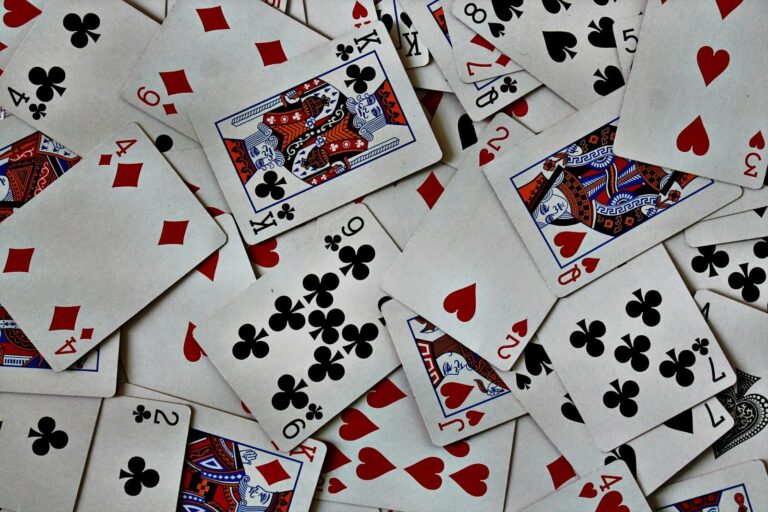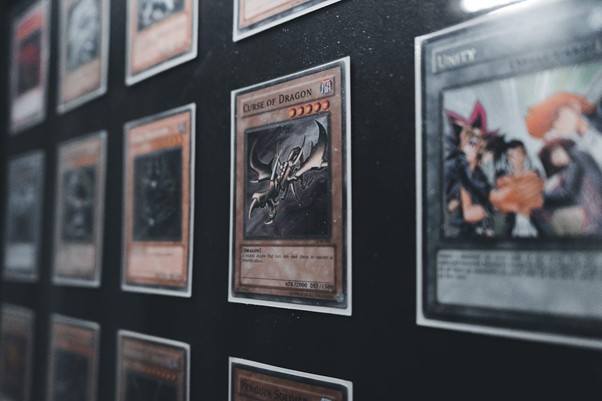

I think that I will never forget the days when we collected and traded Yu-Gi-Oh! and Pokemon cards on the streets with our friends as kids. Man, those days were the best! We had no worries, and we even got excited when we got a new card even though it was Silicon and Cascoon (the most boring Pokémon of all time).
Back then, nobody hoped to get a first-edition shadowless Charizard that was worth a lot of money! We couldn’t care less about money.
Well, things are different nowadays. Not that everything now is looked through how much is it worth, but also we’ve introduced new concepts for collectors that are more suitable for today’s modern time. Yes, you’ve probably guessed it. We are talking about NFTs, crypto, and blockchain technology.
Crypto is used for everything at the moment, from cryptocurrency gambling to play-to-earn NFT games.
Yes, the NFT market crashed and everything has gone sideways since that. The digital pictures that once sold for millions of dollars are now practically worthless.
But this is not the end of this technology. Yes, prices may have been over-inflated on NFTs but that doesn’t take away their purpose and functionality, especially in today’s digital world.
Why Crypto? Isn’t the Old Way Fine?
Yes, maybe collecting physical cards is fine and exciting, but we need something more suitable for modern times. On top of that, physical cards can degrade, get lost, or worse get stolen! Nobody wants that, right?
Also, there are A LOT of fakes on the market that even experts are having a tough time verifying the authenticity of rare cards.
This is where Blockchain technology comes in handy. NFTs or non-fungible tokens are basically digital trading cards that are recorded on the blockchain. Their ownership is trackable, which means that the potential for counterfeiting is zero!
But being a safer alternative isn’t the only advantage that comes with NFTs. They can also be traded and used even for smart contracts or playing video games. Yes, your favorite card from Yu-Gi-Oh! Isn’t only a card anymore since you can basically summon that creature in a video game.
How Do Blockchain-Based Card Games Actually Work?
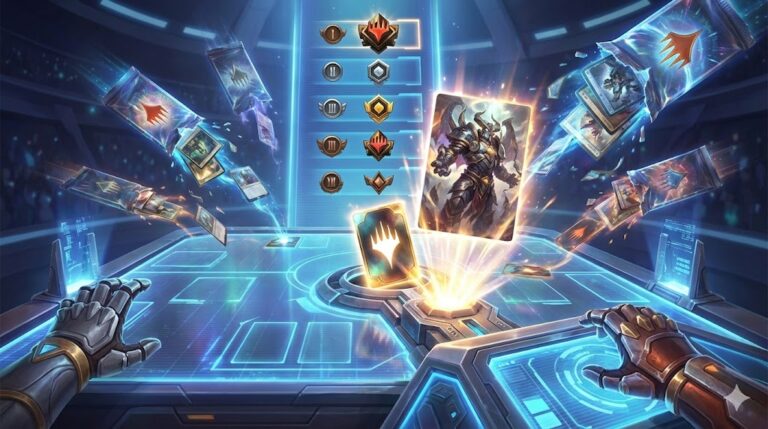
Back in the olden days, we used to collect physical cards where you had to buy packs, open them, and hope to get a rare one. When it comes to blockchain card games, things are very much different.
The cards are presented as digital assets or NFTs, which means that they are one-of-a-kind and are tied to the blockchain for transparency.
How you get them depends on the NFTs. Some can be purchased at an open market, while others can be only obtained by doing certain things or playing video games.
You can trade these with other players or sell them in online markets for cryptocurrency, which is already shaking things up for games like Splinterlands and Gods Unchained.
We also have games like Axie Infinity, where every card, in this case, “Axie” acts as its own NFT with unique stats and traits. Then players use these NFTs in order to battle with each other and earn tokens that can be traded or sold.
Basically, these NFTs create an entire video game economy, but an economy that can have a real-world impact on the players. I don’t know about you, but I think this is pretty revolutionary, and the impact of this technology will go far beyond traditional trading cards.
Are People Actually Playing These Games?
Yes, the number of players is quite impressive Splinterlands is a game with more than 2 million active players, and there are over 100 million cards traded Dark Energy Crystals (DEC) platform.
So, the main reason why people play such games is because of making money. And I wouldn’t blame them. You have fun playing games, but at the same time, you are making money. I don’t think there is anything better than that.
What About Collectors? Is This Just for Gamers?
Nope! Collectors are diving in too. NFTs have completely reshaped the collectible card space. Physical collectibles can be ruined by a spilled soda, but NFTs? They’re untouchable, stored forever in the cloud. Plus, marketplaces like OpenSea let collectors showcase their NFTs in a digital gallery, which sounds a lot better than digging through a dusty binder in your closet, right?
The rarity of NFT cards also adds serious value. Just like a 1999 Charizard, some digital cards become ultra-rare and fetch high prices. One Gods Unchained card, for example, sold for over $60,000! The game itself has traded over $34 million worth of cards. Talk about a golden ticket.
But…What’s the Downside?
Well, while the future looks bright, it’s not all rainbows and rare cards. The volatile nature of cryptocurrencies means that while your rare NFT might be worth a fortune today, it could lose value tomorrow if the market crashes. Plus, blockchain games are still relatively new, so mass adoption could take time.
Also, remember those gas fees—the transaction fees on the Ethereum network? They can sometimes be higher than the card you’re trading, which isn’t exactly ideal. Some platforms like Solana are addressing this issue with lower fees, so the space is evolving, but it’s still something to consider.