
Virtually everyone has heard of James Bond, Star Wars, and Harry Potter – even if they haven’t actively consumed the books, comics, and movies associated with these intellectual properties. In the gaming sphere, iconic characters like Lara Croft and Mario have transcended the boundaries of their medium.
While slightly more niche, Magic: The Gathering has much the same familiar ring for gamers and non-gamers alike. This collectible card game has become a pop culture phenomenon in its own right, spawning just as many copycats as it influenced other fictional works. So, let’s explore the mark that Magic: The Gathering has left on popular culture.
Magic: The Gathering: looking back at a success story
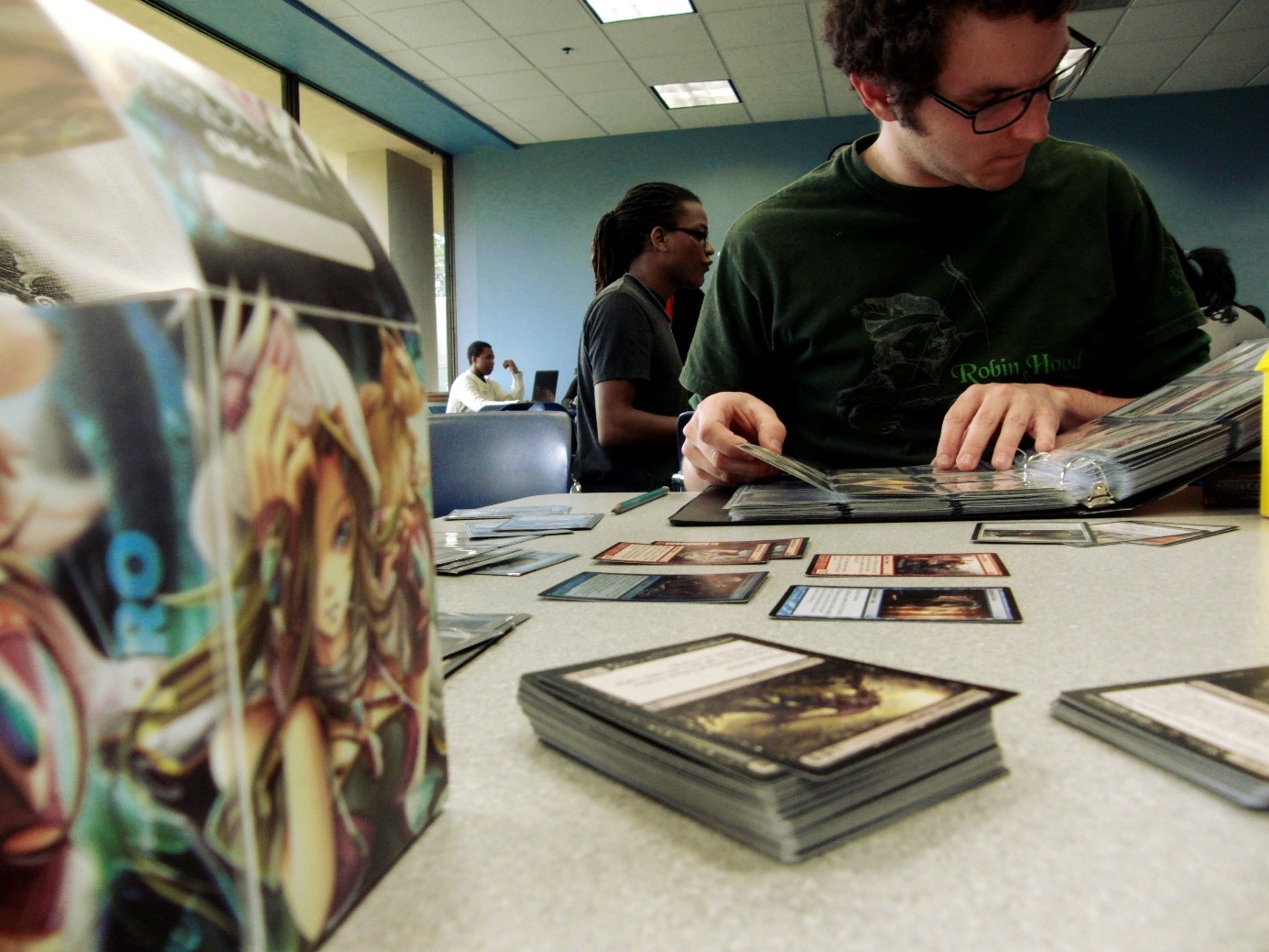
Magic: The Gathering sprung from the mind of American mathematician Richard Garfield in the 1990s. At the time a graduate student enrolled at the University of Pennsylvania, this lifelong tabletop gamer came up with a clever twist on the established card game formula. Distributed by Seattle-based publisher Wizards of the Coast, Magic would come in randomized packs, making collecting and trading rare cards as thrilling as playing matches.
This innovative pattern would also allow for near-limitless personalization, leaving players complete freedom in assembling unique decks and devising witty tactics. Following its release in 1993, Magic rapidly gained traction among players hunting for the most powerful cards to enhance their decks and the most effective combinations to get ahead of the competition. Fast-forward to 2024, and over 50 million people are playing Magic worldwide.
Thousands of game shops routinely organize local tournaments supported by the Friday Night Magic weekly play program. Professional players regularly compete in an international Magic: The Arena esports league. The Magic crowds never wavered in their love for the game, whose creative and business model evolved with the times, reaching broader demographics while promoting inclusivity. This unfaltering popularity inspired countless content creators, developers, and artists.
Magic’s legacy in the gaming industry
Spreading like wildfire in gaming circles, Magic: The Gathering revolutionized the experience at the gaming table, going in a different direction than fantasy tabletop role-playing classics like Dungeon & Dragons. From Yu-Gi-Oh to Pokemon, some of the highest-grossing media franchises would not have existed if not for the first trading card game in history. Magic’s focus on strategy, collectible value, and community engagement was soon emulated by other creators.
In the last decade alone, viral card games like Inscryption, Hearthstone, and Gwent: The Witcher Card Game modeled themselves after Magic and its aesthetics. Meanwhile, Magic’s influence spread into the souls-like genre. Purportedly a massive MTG fan, FromSoftware’s Hidetaka Miyazaki drew inspiration from the series’ lore to think up the premise for Bloodborne, reminiscent of the macabre Innistrad set. Richard Garfield himself explored other venues, joining forces with web3 gaming company Tyranno Studios to develop an MTG-infused blockchain game.
Arguably, Magic’s themes and art direction also inspired software devs in the iGaming industry, providing the creative impetus for fantasy-inspired machine slots like Satyr and Nymph, Necronomicon, or Shadow Summoner Elementals. Players can find many more free slots to play for fun online. Tens of thousands of demo slots are available with no download needed. Playing slots is completely safe on licensed casino operators. Plus, top-tier platforms grant users exclusive deals like free spins and no-deposit bonuses.
The secrets behind Magic’s enduring popularity
Over the years, competitors gradually arose in the TCG space. Magic: The Gathering is no longer the only player in town, with card games like Netrunner offering cheaper economic models as an alternative to its hegemony. While threatened, Magic’s supremacy remains unshaken to its core, thanks in no small part to its loyal fandom.
By fostering a firm sense of community, the game effectively became a social phenomenon. Many players base their social lives around tournaments, where they regularly meet like-minded friends and bring newcomers into their world.
Meanwhile, the game mastered its digital transition, spawning accessible video game adaptations for online play like the free-to-play Magic: The Gathering Arena. Crossovers with legacy franchises like Final Fantasy further broadened the game’s reach. Digital incarnations like the Duels of the Planeswalkers series also eased the learning curve for newbies, helping Magic’s audience evolve to expand beyond fans of physical play.
Magic: The Gathering has been going strong for thirty years and counting. For many long-time players, MTG has become a way of life rather than a simple pastime. Undisputably, the grandfather of all TCGs is now as much a cult classic as a cultural icon.