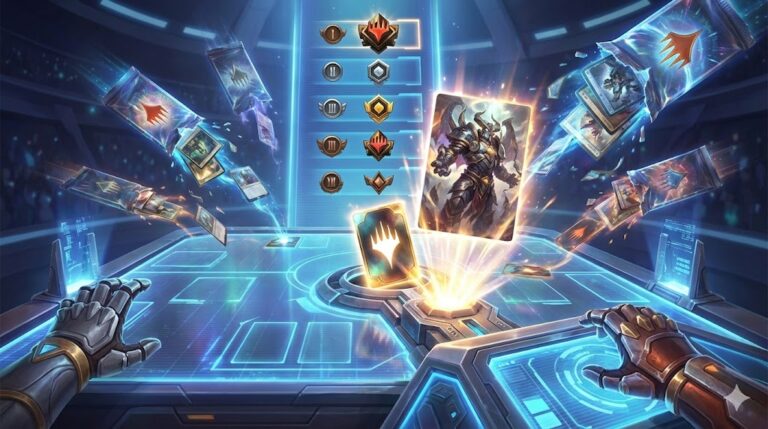


Magic: The Gathering (MTG) is considered by many as the greatest TCG (trading card game) on the market and is wildly popular worldwide. For many, opening booster packs to enhance their deck is one of the most exciting aspects of the game as players are filled with the anticipation of pulling an ultra-rare and valuable card. However, the question on many people’s minds is whether opening boosters can be considered gambling. To find the answer to this question one must explore the legal definition of gambling, and consider how it mirrors other forms of more traditional forms of gambling.
What Is Gambling?
Many players enjoy the thrill of gambling. As such, many gamblers turn to online casinos to experience the excitement that gambling has to offer. Many fast withdrawal casinos, like Instant Casino, offer gamblers a variety of enticing perks such as attractive welcome bonuses, cashback offers, thousands of provably fair games to choose from, safe transactions, and high betting limits. However, the question remains what exactly is gambling?
Gambling is generally defined as any activity of chance, risk, and reward. However, gambling’s legal definition does have slightly altered meanings in different regions. For instance, in the USA according to Sec. 532 of Title 31, the definition of a bet or wager can be understood as risking or staking anything of value on the outcome of a competition or contest, which will then result in somebody receiving or losing something of value based on the eventual outcome.
This could be anything from a sporting event to any game where the outcome is based on chance.
In the UK, gambling is broken into three main categories: Betting, gaming, and lotteries. To understand whether MTG can be considered gambling or not, it is important to understand the UK’s legal definitions of lotteries and gaming which can be understood as:
- Lottery: An arrangement where participants pay to enter, prizes are awarded, and the outcome relies entirely on chance. In a complex lottery, the first prize allocation depends wholly on chance.
- Gaming: Playing a game of chance for a prize, including games with both chance and skill, however, sports are excluded.
Other countries, such as the Netherlands and Belgium, have taken stricter stances, particularly against loot boxes in video games, where content can sometimes be traded for real money.
However, many argue that this does not apply to MTG as players who purchase a booster pack will always receive 15 cards, even if those cards may not be the rare and valuable ones they were hoping for. Compare this to somebody who buys a scratch lottery card, where the likelihood of receiving nothing from their purchase is extremely high. Thus the difference between purchasing boosters and other forms of gambling becomes quite clear, Thus, many attempts to claim that booster packs or look boxes are forms of gambling have been unsuccessful.
The Secondary Market and Chase Cards
The existence of a robust secondary market for Magic cards complicates the issue. Cards with high market value, often referred to as “chase cards,” incentivize players to buy large quantities of booster packs in search of these rare finds. This creates a dynamic similar to gambling, where players are enticed by the possibility of striking it big.
Chase cards in Magic have become increasingly prominent, with features like serialized cards, alternate art, and promotional editions adding to their allure. For instance, the serialized The One Ring card from the Lord of the Rings set reportedly sold for $2 million, leading many players to buy booster packs in hopes of uncovering it. While most players understand the odds are slim, the small chance of hitting such a jackpot can still influence spending behavior.
Are Magic Booster Packs Legally Gambling?
The legal status of MTG booster packs hinges on intent and context. If a person buys a pack purely for fun or gameplay, it’s unlikely to be considered gambling. However, if the purchase is driven by the hope of obtaining a rare or valuable card, especially with the intent to sell it on the secondary market, the activity could meet the legal criteria for gambling in certain regions.
For example, a landmark U.S. case, Schwartz v. Upper Deck Co., ruled that purchasing trading cards with the primary intent of obtaining rare “chase cards” could constitute gambling under New York and New Jersey law. The reasoning was that the chance of obtaining a “chase card” influenced consumer behavior, fulfilling the criteria of chance, consideration (payment), and prize. Applying this precedent to MTG, buying packs solely to find a valuable card like the serialized 001/001 The One Ring card could be considered gambling.
Should Wizards of the Coast Take Action?
With the rising prevalence of chase card Wizards of the Coast, the company behind MTG needs to deal with some ethical questions that have been raised about collectors chasing these valuable cards. The issue is that while boosters make up a fortune of Wizard’s revenue and are a key component of their business model the enormous value being placed on rare cards has led to some problematic spending patterns among fans of the franchise. To counteract this Wizards should take proactive steps to mitigate potential issues such as increasing the transparency of pack contents, limiting the rarity of chase cards, or potentially creating alternative methods to acquire these ultrarare cards in a manner such as making them accessible through winning tournaments.
While booster packs are a core part of Magic’s business model, the inclusion of high-value chase cards can encourage excessive spending, particularly among vulnerable players. Steps such as increased transparency about pack contents, limiting the rarity of chase cards, or creating alternative ways to acquire them could help mitigate potential issues.
Conclusion
So, is Magic: The Gathering gambling? The answer depends on the context and intent behind purchasing booster packs. Legally, the activity doesn’t always meet the criteria for gambling, but it shares enough similarities to warrant scrutiny. The elements of chance at play, combined with the influence of the secondary market, make booster packs comparable to gambling in certain scenarios.
Ultimately, whether Magic boosters are considered gambling or not, it’s important for players to open boosted responsibly. The thrill of opening a pack can be enjoyable, but it’s crucial to approach the experience with moderation and an understanding of the underlying dynamics. For Wizards of the Coast, addressing the ethical implications of chase cards could help strike a balance between maintaining player excitement and promoting responsible practices.