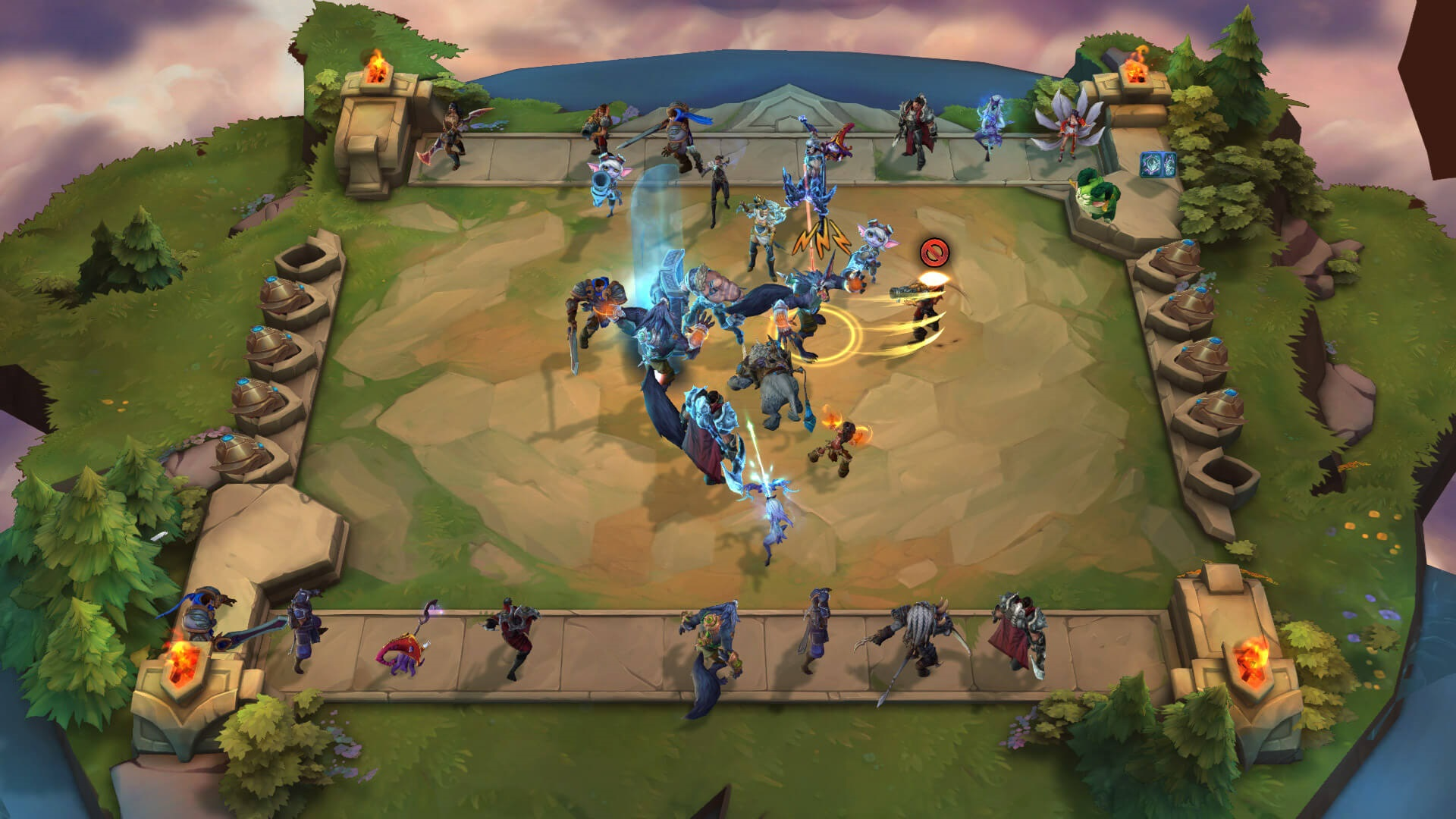

In the world of strategy-based games, two juggernauts have stood out in the last few years, those being Teamfight Tactics and MTG Arena.
Even though the gameplay process is completely different, these two games share the common reliance on strategic thinking and tactical decision-making
That being said, there are some crucial differences in the game’s ranked systems that are worth noting before you start playing.
Ranked Structure
TFT ranked structure
Teamfight Tactics’ ranked structure mirrors the one set in place by League of Legends, having 10 ranked tiers that are present in the main game.
These are the ranks in Teamfight Tactics in order:
- Iron
- Bronze
- Silver
- Gold
- Platinum
- Emerald
- Diamond
- Master
- Grandmaster
- Challenger
All of these ranked tiers apart from Master, Grandmaster, and Challenger (Apex tiers) are further separated into 4 divisions (eg. Silver III).
In Master+, players aren’t divided into tiers but they rather compete with one another for spots on a public server-based leaderboard.
MTG Arena ranked structure
There are certain similarities and differences between TFT’s and MTG Arena’s ranked ladders, most notably the number of ranks.
Unlike Teamfight Tactics, MTG Arena has fewer ranks as it only divides the ranked system into 6 ranks, those being:
- Bronze
- Silver
- Gold
- Platinum
- Diamond
- Mythic
All 6 ranks are divided into 4 tiers each, much like TFT where tiers are divided into divisions. Mythic rank is the most covetable rank in the MTG, unlike Teamfight Tactics where the Challenger rank reigns supreme on the ranked ladder.
In the Mythic rank, there are no tiers and progression is displayed through a percentage that changes to a number once you’ve reached 100%. This number represents your position on the global ranked ladder among the top MTG Arena players in the world.
Ranked formats
MTG Arena’s alternate formats
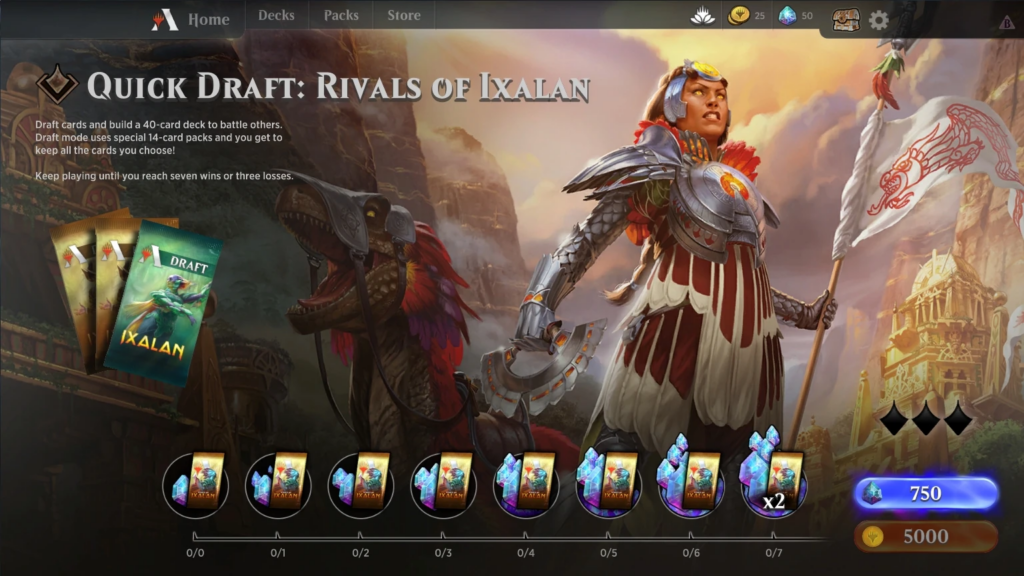
Unlike TFT where all players participate in a single format that adheres to the same ruleset and meta, MTG Arena offers you several unique formats to participate in.
First of all, there are two primary formats in MTG Arena, those being constructed and limited. The Constructed format is approached with a pre-made deck that’s built out of cards from your collection.
On the other hand, the Limited format deck is built through a system where you assemble a deck from a limited pool of cards. There are two forms of Limited format gameplay, those being Sealed and Draft.
In Sealed, you construct a 40-card deck from six unopened booster packs at the start of the event. Draft is a bit more complicated though, as you share the booster packs with 8 other players where cards are distributed in a drafting session.
Ranked progression
TFT ranked progression
In Teamfight Tactics, in order to progress through the game’s ranked ladder, you must amass enough LP (league points). Reaching 100LP triggers an instant promotion, pushing you to the next division or tier.
League points are earned by being among the top 4 players in a TFT match and the amount you receive depends on your final position.
Similarly, you can also lose LP if you finish among the bottom 4 players which can lead to potential demotion. Demotion occurs if you end up losing too many games while you’re at 0LP, which demotes you to the next rank in order.
Because of this, climbing can be very stressful which is why it isn’t uncommon for players to use TFT boosting services in order to increase their rank.
MTG Arena ranked progression
In the MTG Arena, climbing the ladder means winning matches and collecting steps that progress your rank. The number of steps you require before you progress into the next tier depends on whether you’re playing in a Bo3 or a Bo1 format.
Additionally, unlike Teamfight Tactics, once you’ve reached a certain rank in MTG Arena, you can never demote or lose it in any way as you can only de-rank within a single tier.
This makes progression on the ranked ladder much simpler and less stressful as you get to keep the rank you’ve earned for the rest of the season.
Ranked rewards
TFT ranked rewards
As far as Teamfight Tactics rewards go, they’re fairly humble as Riot only rewards you with an emote at the end of each ranked season.
The appearance of these emotes is based on your final rank in the season, meaning that higher ranks get better-looking emotes.
MTG Arena ranked rewards
Depending on your ranked success, there are several rewards WoTC hands out that enrich your card collection and power up your decks.
| Rank | Reward |
| Bronze | 1 Outlaws of Thunder Junction pack |
| Silver | 1 Outlaws of Thunder Junction pack + 500 gold |
| Gold | 2 Outlaws of Thunder Junction packs + 1,000 gold + Binding Negotiation card style |
| Platinum | 3 Outlaws of Thunder Junction packs + 1,000 gold + Binding Negotiation card style + Aven Interrupter card style
|
| Diamond | 4 Outlaws of Thunder Junction packs + 1,000 gold + Binding Negotiation card style + Aven Interrupter card style |
| Mythic | 5 Outlaws of Thunder Junction packs + 1,000 gold + Binding Negotiation card style + Aven Interrupter card style |
On top of that, the top 250 Mythic players in a season get invited to participate in a Qualifier Weekend, opening the doors to more potential prizes.
Ranked season length
In Teamfight Tactics, a ranked season lasts for four months, which means that there are 3 ranked seasons per year.
In MTG Arena, however, a ranked season only lasts for a single month after which all ranks get reset and players start their ranked journey anew.