
Many people enjoy traditional card games, but some are looking to branch out into more modern collectable card games. Two of the most popular trading card games today are Pokémon and Yu-Gi-Oh!. Both have developed large international fanbases over the past couple decades and show no signs of slowing down. If you are a fan of classic card games, and you usually frequent sites like BonusFinder looking for something new, you might want to switch to collectable card games. Here is an overview comparing these two major players in the world of trading card games.
Gameplay Mechanics
Pokemon and Yu-Gi-Oh! share some gameplay similarities, but also have key differences. Both games involve deck building, where players construct a deck of cards to battle opponents. Cards represent different characters or abilities that can be summoned during a match. Players take turns placing cards and using abilities and strategies to reduce the opponent’s life points to zero.
Where the games differ is in the nitty gritty rules. Pokémon utilizes basic energy cards and evolutions to power up your bench. Yu-Gi-Oh! focuses more on summoning powerful monsters through tributes and fusions. Pokémon aims for simplicity, while Yu-Gi-Oh! has more complex rules with more ways to manipulate the field. Pokémon may be easier for trading card game beginners to pick up. Yu-Gi-Oh! offers more variety in viable strategies for experienced players.
Card Collectability
One of the big draws of trading card games is collecting rare and powerful cards to improve your deck. Both Pokémon and Yu-Gi-Oh! have built a reputation for having coveted ultra-rare cards that can sell for hundreds or even thousands of dollars. This adds to the excitement of opening fresh packs of cards, not knowing what prized card could be inside.
However, Pokémon generally offers a more rewarding collecting experience. With Pokémon, rare cards tend to hold their value and remain tournament legal longer. Yu-Gi-Oh! is known for banning or limiting cards fairly quickly after release, making some high-value cards useless in competitive play. Pokémon also has special ultra-rare cards like Charizards and Gold Stars that collectors go crazy over. The most iconic and desirable Pokémon cards are arguably more prestigious than Yu-Gi-Oh!’s top cards.
World Building and Story
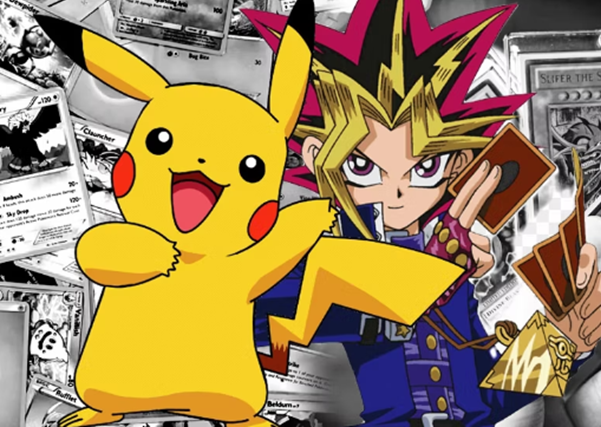
Part of what makes these trading card games so engaging is that they are based on deep worlds with intricate lore. Pokémon has the advantage here with 25+ years developing the Pokémon universe across various media like TV shows, movies, and video games. Fans connect with known characters like Pikachu and immerse themselves in the Pokémon world.
Yu-Gi-Oh! also has compelling world building and narratives, especially with the original Yu-Gi-Oh! manga and anime. However, much of this is lost in the transition to the real-life card game. Yu-Gi-Oh! cards have awesome-looking monsters but often lack context, whereas Pokémon cards directly represent characters fans are invested in. The strength of the Pokémon franchise makes its world more appealing.
Tournament Scene and ESports Viability
An important aspect of successful trading card games today is having an active tournament scene and potential as an eSport. Both Pokémon and Yu-Gi-Oh! have official large-scale tournaments, pro players, and coverage. However, Pokémon has generally been the more viable eSport.
Pokémon tournaments attract sponsors and have larger prize pools than Yu-Gi-Oh!. Simplicity in mechanics means Pokémon matches are easier to follow as a spectator eSport. Pokémon also benefits from having a popular, user-friendly video game that emulates the physical card game. The Pokémon Trading Card Game Online lets players practice digitally and brings new people into the hobby. Pokémon has more growth potential for its tournament scene moving forward.
Pokémon and Yu-Gi-Oh! have comprised the top tier of trading card games for decades. They both deliver compelling gameplay, collectability, and strategic depth that blows traditional card games out of the water. Pokémon edges out Yu-Gi-Oh! in terms of newcomer accessibility, coveted cards holding long-term value, storytelling, and eSports viability. However, Yu-Gi-Oh! offers seasoned card game fans more of a challenge with its intricate mechanics. Overall, both games provide immersive fun, it just depends on the player’s preferences and experience level. For card game enthusiasts old and new, Pokémon and Yu-Gi-Oh! deserve recognition as pillar franchises in the trading card game genre.