
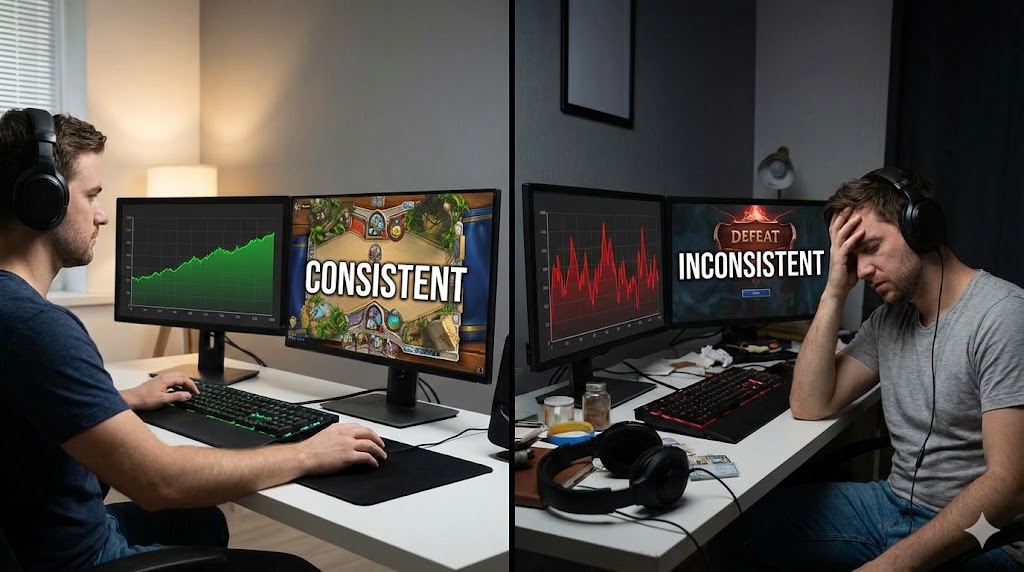

Session-level tracking is becoming a focal point for MTG Arena players in 2026 as new tools make it easier to isolate performance by individual play blocks rather than by season or rank alone. The shift matters because aggregated win rates often hide short-term swings that directly affect decision quality, emotional control, and long-term improvement.
Breaking Down a Session
Instead of asking whether a deck is “good overall,” players are increasingly asking when and under what conditions it performs well. That framing brings mental stamina and scheduling into the same analytical space as card choices and sideboard plans.
High-intensity games demand mental resets, especially after narrow losses or streaks that drain focus. Some players deliberately step away between sessions, whether that means reviewing logs or switching to lighter entertainment where outcomes reset quickly. For example, taking a short break to play Gates Of Olympus 1000 now might allow players to return feeling refreshed. Casual games like this can be over whenever the player decides – whether it’s a few minutes or half an hour.
The common thread is recognising that sessions have psychological weight, and ignoring that weight can quietly erode consistency over time.
Defining Session-Based Data Buckets
A session, in analytical terms, is a continuous block of matches played without a significant break. Treating it as a unit allows players to compare early-match precision against late-session fatigue, rather than averaging everything into a single percentage.
This approach reframes familiar benchmarks. Meta decks on MTG Arena typically post a 55–60% average win rate, but that figure assumes stable conditions. Session-level splits often reveal that the same list oscillates well above and below that range depending on timing and mental state.
Identifying Variance And Tilt Signals
Once sessions are isolated, patterns emerge quickly. Short losing streaks tend to cluster, not randomly, but around moments where decision speed increases and sequencing errors creep in. Those errors are rarely visible in aggregate stats.
Overlay tools that log matches individually make this clearer. Platforms like a deck-tracking overlay tool show per-session mulligan choices, match length, and win-loss swings, helping players identify when tilt begins rather than guessing after the fact. The value lies less in raw numbers and more in recognising behavioural inflection points.
Correlating Time And Performance
Time-of-day analysis adds another layer. Many players assume their performance is consistent as long as they are technically prepared, yet session data often contradicts that belief.
Morning sessions may show tighter play and better risk assessment, while late-night blocks drift toward autopilot lines. Without session tagging, those differences vanish into season-long averages, masking the role that energy management plays in competitive outcomes.
Using Breaks To Reset Decision Quality
The practical takeaway is not to play less, but to play more deliberately. Treating each session as a fresh sample encourages intentional breaks, review windows, and even hard stop rules after defined loss thresholds.
For competitive players, this mindset aligns technical mastery with mental maintenance. Session-level tracking does not replace deck optimisation or meta study, but it contextualises them. By understanding when performance drops and why, MTG Arena players gain a clearer path to consistency that aggregate stats alone cannot provide.