
Magic: The Gathering (MTG) has maintained its position as a leading card game since its inception thirty years ago, while attracting millions of players who engage in trading and competitive gaming. The game faces ongoing ownership issues, counterfeit issues, and accessibility limitations despite its expansive player base. Physical cards become susceptible to counterfeiting, while digital platforms maintain restricted access, and worldwide trading operations face restrictions. The blockchain technology shows potential to resolve these existing problems.
The concept is not as impossible as you might think. Blockchain technology has entered two separate markets, which include digital art and online casinos, to protect ownership and create efficient payment systems. The technology allows players to establish transparent systems, which essentially ensure card uniqueness, permanent record-keeping, and it allows trading between users. But would blockchain technology improve the game experience or create additional unwanted issues?
How Blockchain Could Change MTG
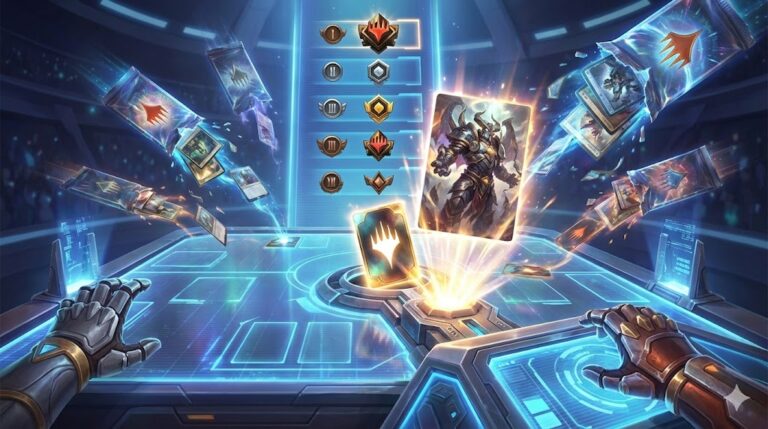
To understand what blockchain might do for MTG, it helps to understand how ownership works today. With physical cards, value comes from scarcity and authenticity, yet counterfeits have always been a problem. In online versions like MTG Arena, you can buy cards, but you do not actually own them outside the platform. If the servers go offline, so do the collections.
On a blockchain, every card could be minted as a unique digital asset. This record would prove authenticity and show the full history of each card, from its first minting to every trade. Players could buy, sell, or swap their cards across borders instantly.
This isn’t far off from what already happens in other blockchain-based games, or in the case of the best crypto casinos to play, where digital assets and currencies are handled securely in a way that gives players trust in every transaction. These casinos rely on blockchain to prove fairness, speed up payments, and protect user funds, showing how the same technology can provide transparency and reliability in environments where money and digital value are central.
For Magic, this could mean a secondary market that is faster, safer, and more transparent than anything possible today.
Ownership Without Boundaries
Perhaps one of the strongest arguments for blockchain in MTG is the actual freedom it would give players to truly own their collections. This means moving between physical and online gaming without hassle and without worrying about counterfeits or closed systems. If every card had a blockchain record, it would be impossible to fake, tamper with, and easy to verify.
This would also create opportunities for cross-platform use. A card minted on one platform could appear in multiple digital games or even link to its physical counterpart. Collectors could show off their rare finds in online galleries, while competitive players could carry their decks across formats without needing separate collections. This is the type of verified ownership that would narrow the existing gap between collecting, playing, and trading, all while preserving the value of each card.
How Other Titles Are Testing Blockchain Ideas
MTG wouldn’t be the first game to experiment with blockchain. Titles like Parallel (a card-battle game combining crypto assets) and EVE Frontier (a space strategy MMO with blockchain elements) are showing how ownership, trade, and transparent histories of items can work in practice. Players in these games trade cards, ships, or resources that are recorded on public ledgers. Authenticity is built in. Developers release rare assets or limited editions and let players prove ownership without middlemen. For Magic, this suggests a system where trades are fast, authenticity is obvious, and collectors feel confident that their cards are real.
Are There Potential Challenges?
While the idea sounds appealing, it comes with real hurdles. The first is volatility. If cards are tied to cryptocurrency values, their worth could swing wildly from one day to the next. Players may not want to see their favorite deck double in price one week and lose half its value the next.
Another issue is accessibility. Not every player is comfortable setting up wallets or managing private keys. Unless systems are designed to be as simple as buying a card pack in a store, adoption would lag. Developers would need to build user-friendly solutions that hide the technical side of blockchain.
Regulation is another factor; crypto assets fall under different rules depending on the country, and companies may face legal obstacles that do not exist today. For a global brand like Magic, this could complicate things further.
Finally, there is the cultural side. Magic has always thrived on the tactile joy of opening packs, shuffling decks, and trading face to face. Shifting too far toward digital ownership risks alienating part of the community. Any blockchain move would have to complement the physical experience rather than replace it.
Opportunities for Players and Developers
Despite these challenges, the potential upside is hard to ignore. For players, blockchain offers peace of mind that their collections are secure, authentic, and tradable. For developers, it creates new revenue streams through tokenized sales and secondary market royalties. It could also build stronger communities by making collections more valuable outside of organized play.
Card scarcity could be managed in new ways. Limited editions, event-exclusive cards, or artist-signed versions could all be tokenized, creating rare assets that carry both collectible and competitive value. Developers could even experiment with hybrid models, where physical cards come with blockchain records, marrying the old and new experiences.
Where Magic Could Go with Blockchain
The question isn’t whether blockchain could work for Magic: The Gathering. Technically, it could. The real question is whether it should. Players are right to be cautious, as the risks are as real as the opportunities. The key may be gradual adoption. Instead of transforming the entire system overnight, developers could start small: tokenized promo cards, blockchain-backed trading platforms, or optional wallets for digital collections.
This way, the community could test the waters, learning what works without feeling forced into an unfamiliar system. It also gives developers time to iron out the technical, legal, and cultural wrinkles before moving forward.
Conclusion
Putting MTG on the blockchain would not be a simple fix, but it could solve long-standing issues around ownership and authenticity. It could create global markets where trades are instant and secure, while creating opportunities for both players and developers. Blockchain might not replace the feeling of cracking open a booster pack, but it could make the digital side of the game so much more reliable and rewarding.