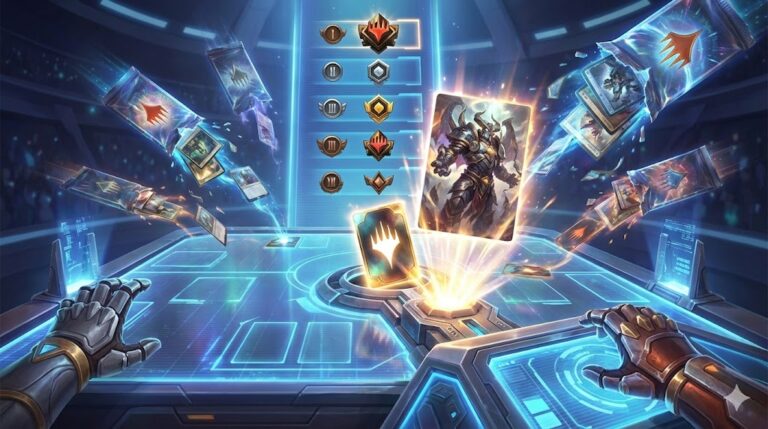


There’s something oddly satisfying about the rustle you hear when drawing a card in MTG Arena, or the quiet riffling noise as your deck gets shuffled after a search. For years, game designers have been fine-tuning these audio details to work hand-in-hand with how the brain reacts to rewards. What looks like a small feature is often a carefully engineered tool to make players feel engaged, motivated, and emotionally connected.
This isn’t manipulation—it’s immersion, and in a time when our attention is often divided across dozens of apps and tabs, tricks to help keep your brain engaged are extremely valuable to game developers.
When Sound Becomes Feedback
Reward loops in games rely on fast, clear, and memorable feedback. It’s what tells you “that move was good” before your brain can even analyze it. MTG Arena nails this with details like the sound each creature makes when it deals damage to an opponent, with the crash becoming louder and stronger as the creature’s power increases. Likewise, the notes at the end of a match, whether that’s the victory tune or the sound of defeat, encourage players to start another match and see if they can repeat their victory, or simply do better next time.
This same idea shows up across genres. In fighting games, the punchy crack of a landed combo doesn’t just confirm success—it feels satisfying. In platformers, the moment you collect a coin or star, there’s always a matching sound cue to keep your momentum going.
And the psychological edge of audio reinforcement isn’t limited to traditional games.
Casino Games and the Science of Satisfaction
Casino games are one of the clearest examples of how sound plays a direct role in engagement. Designers know players respond more strongly to multi-sensory feedback—especially when it’s tied to anticipation and outcome. A spinning reel that builds tension through rising notes, followed by a celebratory chime on a win, taps into the brain’s dopamine system. But unlike visual animations that can sometimes cause overload, audio can be more subtle and efficient.
This layered feedback loop—building tension, result, then tension mounting again—is used strategically across a variety of casino games to enhance the user experience. Whether it’s being used in a reel-based slot or a table game with cards, the right sound keeps you focused on the next move. This is part of what makes casino games so immersive even in short sessions.
A perfect example of this comes from a recent Instagram reel showing a player interacting with the Azteca Temple of Wins – Hold & Win game. When a match occurs, the music crescendos with celebratory sound effects that align perfectly with glowing animations. What’s striking isn’t the visuals—it’s how the audio frames the entire moment, creating tension and satisfaction in a smooth loop. That’s not accidental. It’s audio design doing its job.