
Magic: The Gathering Arena (MTGA) is one of the most succesfull games in the card game industry thanks to a mix of particular ingredients. It exists as a combination of not only artistic skill and mathematical precision but also intuitive gameplay. Creating a deck that maintains competitive strength in an ever-changing game scenario requires and almost scientific approach to deck-building but also a high-degree of creativity.
And such an intricate battlefield underwent already a transformation through the emergence of artificial intelligence.
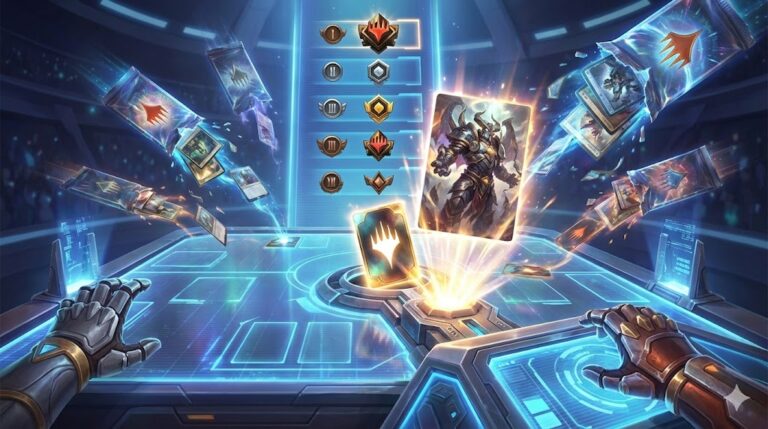
Players now use data scraping tools and machine learning algorithms to enhance their strategies as they turn to technology for improvement. The result? The way decks get built and refined and played has changed because of this shift which affects both professional players and casual competitors who want to climb the ranks.
The New Era of Deckbuilding
Gone are the days when players would spend hours manually analyzing match-ups and tweaking cards through trial and error. Today, platforms like MTGA Assistant, Untapped.gg, and 17Lands collect millions of data points from matches around the globe. These tools track win rates, card usage, mulligan behavior, and curve optimization across thousands of games.
Layered on top of that, machine learning algorithms, both independent and community-built, are beginning to model optimal decklists based on meta shifts. By recognizing patterns and correlations that human players might miss, these tools can predict which archetypes are about to surge in popularity, or which specific tech cards are currently over-performing.
For example, after a recent set release, several AI-driven deck trackers noted an unusual uptick in midrange Gruul builds. Not from player discussion, but from subtle shifts in sideboard preferences and early-game curve efficiency. A week later, content creators were showcasing these lists as “breakout decks.” The AI had already seen it coming.
Personalized Optimization
Some tools are now capable of tailoring recommendations based on your own gameplay history. Did you win more often when running fewer three-drops? Are your losses coming from bad curve sequencing or resource management? AI doesn’t just point to the best-performing decks, it shows you what you should be playing to win more based on your individual patterns.
This personalized approach makes tech not just a competitive edge, but a learning companion. It offers newer players a way to climb the learning curve faster, while giving veterans the edge to stay ahead of a rapidly shifting meta.
Tech-Driven Adaptation Across Industries
The integration of AI into MTGA mirrors a broader trend in digital spaces: industries using data and automation to reinvent the user experience.
One of the most striking examples of this outside gaming is in the online casino industry. Traditionally tied to physical locations, brick-and-mortar casinos had limited reach and operational hours. But once the digital transformation began, innovation moved rapidly. Now, with the use of streaming tech, AI-powered personalization, and dynamic bonus systems, online casinos have become accessible to a global audience, playable anytime, anywhere.
Modern platforms offer tailored promotions through AI that learns a player’s habits and preferences. Features like real-time matchmaking with live dealers, themed seasonal content, and predictive game recommendations have transformed what was once a static experience into a dynamic, evolving one. Platforms offering a variety of online casino bonus have particularly leveraged this shift, using these incentives to attract and retain players in a crowded market.
The takeaway? When technology is applied thoughtfully, whether in MTG Arena or online casinos, it enhances accessibility, improves personalization, and drives engagement. It democratizes success, helping even casual users compete with the pros.
Looking Ahead
As we move deeper into the era of AI-assisted gameplay, questions about balance and fairness will naturally arise. Should every player be expected to use data trackers? Will the meta become stale if everyone’s following the same machine-generated lists?
The truth is: while AI can offer insights, intuition, creativity, and adaptability still reign in competitive play. A perfectly built deck is only as strong as the hands that pilot it. What these platforms offer is not a shortcut, but a compass, helping players navigate the complexity of Magic with better data and smarter decisions.
And as the meta evolves, so too will the technology, creating a feedback loop where competition and innovation drive each other forward.
In the end, whether you’re brewing your next control masterpiece or fine-tuning your aggro curve, AI is quickly becoming your most powerful ally. Just as other industries have embraced this digital shift, Magic too is stepping into a smarter, faster, and more connected future.