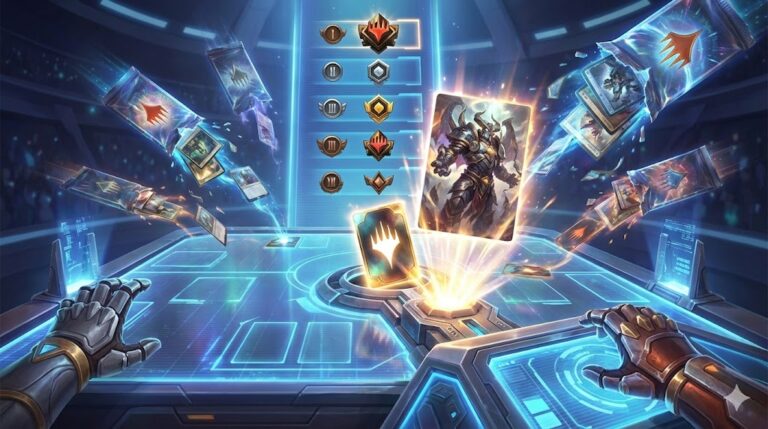

It is amazing how much collectible card games (CCGs) have changed over the years. Today, they are not just games but form part of an important sports industry. For example, Hearthstone, Magic: The Gathering Arena, and Legends of Runeterra are some of the titles that demonstrate the growth of CCGs into eSports that are played for high stakes.
1. The Competitive Appeal of CCGs
Esports are a great environment for CCGs because they combine strategy, skill and chance. A player has to be able to come up with decks, predict what the enemy is going to do as well as be able to change playing tactics quickly. Most esports genres are known for being fast-paced and requiring quick reflexes; however, CCGs promote rational decision-making, out-of-the-box thinking, and foresight.
Many CCGs, such as Hearthstone, have embraced esports with official tournaments like the Hearthstone Masters Tour. These tournaments draw participants from all over the world who stand a chance to win significant amounts of money, confirming their place within eSports. Also, the ease with which one can access digital platforms today means that there is increased introduction of inexperienced gamers into the industry.
2. Building Communities and Fandoms
CCGs have a very important role of bringing people together in esports. Gamers commonly create connections through shared tactics, deck construction advice, and card exchange. The emergence of platforms such as Twitch and YouTube has only served to increase this unity as gamers can follow some of the more popular players and see a lot of available content.
Fan engagement extends beyond just watching games. Many CCG enthusiasts participate in forums, local tournaments, or online ladder matches, fostering a vibrant ecosystem that supports both casual and professional players. This grassroots involvement is critical to the growth and sustainability of esports as a whole. As esports continues to grow, it can also be integrated into various betting markets on platforms like SansliSaray, where fans can engage with their favorite games in new and exciting ways.
3. Technological Advancements and Accessibility
CCGs integration into esports was greatly enhanced by their digitalization. Through platforms such as Magic: The Gathering Arena and Gwent, these games can now be easily accessed. With this in mind, it is possible for players to do away with the need for tangible cards, face-to-face rivals and still have the chance of taking on anyone across the globe 24/7.
Furthermore, the development of live streaming and broadcasting technologies has increased the interactivity of CCG eSports events. These interfaces are good for watching because they show every detail about cards and what the gamers plan to do, drawing in more fans.
4. Challenges and Opportunities
While CCGs have carved a niche in esports, they face unique challenges. Balancing game mechanics to ensure fairness is crucial, as pay-to-win models can deter competitive players. Additionally, the inherently slower pace of CCGs compared to action-packed games like League of Legends may limit their appeal to some audiences.
However, these challenges also present opportunities. The strategic nature of CCGs can attract viewers seeking thoughtful and analytical gameplay. Esports organizers can also experiment with hybrid tournament formats, blending live and digital components to enhance engagement.
5. The Future of CCGs in Esports
In the future, CCGs seem to be taking an even greater place in the esports landscape. The growth is likely to lead to a transformation of the sector through increased integration of various technologies such as artificial intelligence in match-making, augmented reality in card interaction and blockchain on card ownership. Also, teaming up with well-known franchises and intellectual properties could attract more people.
CCGs will remain a key component of contemporary esports, mixing culture and technology in an incomparable way, provided that there is continued innovation as well as a resolute support from the community.