
Below is an in‑depth look at the top five Ranked Season events in MTG Arena. We’ll examine:
- Standard, Historic, Alchemy, Explorer, and Premier Draft
- Their typical monthly durations
- The structure of seasonal rewards
- Key nuances and evolving details
Although the broad outlines of these Ranked formats are well‑documented, specific details—such as exact card pools, banlists, and reward cosmetics—can shift over time. It’s advisable to verify the current rules and rewards in‑client or via official announcements each month.
1. Standard Ranked
Overview
Standard Ranked mirrors the tabletop Standard rotation, typically featuring the most recent two years of expansions. It often serves as the entry point for newer players and generally has the highest participation of all Constructed queues.
Key Features
- Card Pool: Approximately 8–10 most recent sets. Rotations occur annually with the release of fall sets.
- Match Types: Both Best‑of‑One (BO1) and Best‑of‑Three (BO3) queues feed into your overall Constructed rank.
Points of Uncertainty
- Mid‑rotation set releases (e.g., Core Sets) can introduce unexpected shifts in the meta.
- Exact card legalities may vary slightly if emergency bans occur mid‑season.
2. Historic Ranked
Overview
Historic Ranked is Arena’s main “eternal” Constructed format, launched to allow the use of cards beyond Standard. It includes every set available on Arena, plus select digital‑only Historic Anthology releases.
Key Features
- Card Pool: Every Arena‑available card, including supplemental Historic Anthology additions.
- Balance Changes: Cards can be rebalanced digitally or banned if they become overly dominant.
Points of Uncertainty
- The ever‑expanding card pool can produce emergent archetypes that may require further bans or rebalances.
- Historic’s balance approach is more dynamic than tabletop, leading to occasional sudden adjustments.
3. Alchemy Ranked
Overview
Alchemy is Magic: The Gathering’s digital-first Constructed format, exclusive to Arena, where cards undergo live rebalancing, suspension, or even gain entirely new mechanics post-release. This ever-evolving design philosophy, described by lucky-7-bonus.com gaming strategists as ‘reshuffling the deck mid-hand in high-stakes play’ enables experimental gameplay innovations impossible to replicate in paper Magic.
Key Features
- Digital‑Only Cards: Includes rebalanced versions of existing cards and new mechanics exclusive to Alchemy.
- Ongoing Updates: Wizards may adjust card power levels mid‑season, so deck tuning often requires checking patch notes frequently.
Points of Uncertainty
- A deck that is strong one week may be nerfed the next.
- The evolving nature of Alchemy demands constant attention to official patch notes.
4. Explorer Ranked
Overview
Explorer serves as Arena’s on‑ramp to Pioneer: a non‑rotating, tabletop‑authentic Constructed format using all Pioneer‑legal cards implemented on Arena.
Key Features
- Card Pool: All Pioneer‑legal sets (from Return to Ravnica onward) currently available in Arena; excludes Alchemy‑specific cards.
- Banlist: Adopts the official Pioneer paper banlist; cards are banned rather than digitally rebalanced.
Points of Uncertainty
- Explorer is expected to eventually transition fully into tabletop Pioneer once all cards are live—timing remains fluid.
- Community feedback may influence which cards get implemented next, slightly altering the format over time.
5. Premier Draft Ranked
Overview
While not a Constructed format, Premier Draft Ranked is the Limited leaderboard. It reflects your performance in monthly Best‑of‑One draft events (typically the newest set) and tracks separately from Constructed.
Key Features
- Deck Construction: Draft three packs and build a 40‑card deck on the fly.
- Ranking: Draft wins and losses contribute to a separate Limited rank that resets monthly, with rewards structured similarly to Constructed queues.
Points of Uncertainty
- Draft format strength can fluctuate wildly based on the power level of the latest set.
- Seasonal reward cosmetics for draft may differ slightly from those in Constructed.
Monthly Season Duration
All Ranked formats share a roughly monthly cycle, resetting at noon Pacific Time on the final day of each month. The following table illustrates a typical timeline:
|
Month |
Season Start (PT) |
Season End (PT) |
Reward Distribution |
|
May 2025 |
Apr 30, 12:05 p.m. |
May 31, 12:00 p.m. |
At start of June season |
|
Jan 2025 |
Dec 31, 12:05 p.m. |
Jan 31, 12:00 p.m. |
At start of February season |
|
Dec 2024 |
Nov 30, 12:05 p.m. |
Dec 31, 12:00 p.m. |
At start of January 2025 season |
Note: Exact dates and times may vary slightly; always confirm in the game client.
Seasonal Rewards Breakdown
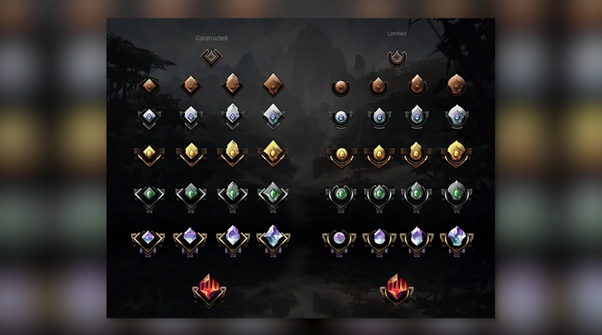
Seasonal rewards typically include a mix of card packs, gold, and exclusive cosmetics such as card styles or card backs. While cosmetics rotate each season, the tiered structure generally remains consistent:
|
Rank Tier |
Typical Rewards |
|
Bronze |
1 Foundations Pack |
|
Silver |
1 Foundations Pack + 500 Gold |
|
Gold |
2–3 Foundations Packs + 1 000 Gold + 1 Card Style |
|
Platinum |
3–4 Foundations Packs + 1 000 Gold + 2 Card Styles |
|
Diamond |
4 Foundations Packs + 1 000 Gold + 2 Card Styles |
|
Mythic |
5 Foundations Packs + 1 000 Gold + 2 Card Styles + Mythic‑only cosmetic (e.g., special card back) |
For instance, a recent January season featured unique styles for Reclamation Sage at Gold+ and Alesha, Who Laughs at Fate at Platinum+.
Comparative Insights & Tips
- Unified Constructed Ladder
All Constructed queues (Standard, Historic, Alchemy, Explorer) contribute to a single rank. Improving your performance in one format also boosts your overall Constructed placement. - Pre‑Reset Positioning
Finishing a season at a higher rank grants you a better starting position in the next month’s placement matches, softening the impact of early losses. - Format Volatility
Alchemy’s digital-only rebalances create more dynamic metas, but potentially less deck stability. Historic can also see sudden changes due to emergency bans or Anthology additions. - Pioneer Preparation
Explorer is an excellent way to practice for tabletop Pioneer events once Arena completes its implementation of the full Pioneer card pool. - Draft Adaptability
Stay up to date with set reviews and draft archetypes. A set’s power level heavily influences Premier Draft performance, so early exploration of new draft signals can confer an edge.
Final Thoughts & Further Exploration
The landscape of MTG Arena Ranked Seasons is constantly evolving. Which format feels most “healthy” or enjoyable remains a matter of personal taste and ongoing community debate. Regularly consulting patch notes, meta reports, and third-party tracker sites can help you stay ahead of changes.
Because specifics—like minor reward tweaks or emergency bans—can arise with little notice, it’s prudent to:
- Check the In‑Game Ranked Tab at the start of each month
- Review Official Wizards of the Coast Announcements for rotation or balance news
- Engage with Community Resources such as streamers, content creators, and meta aggregators
Ultimately, the best way to master these ladders is through active play, observation, and adaptation. Good luck this season—and may your draws be consistently on point!