
Caribbean‑focused readers know that islands have long punched above their weight in services – from offshore finance and shipping to destination events and tourism tech. In the last couple of decades, a growing number of these small jurisdictions have added regulated online gambling to that list, using licensing regimes and server infrastructure to host casino platforms that serve players far beyond their own shores.
On the other side of the equation sit European slot studios, which develop their games under strict national and EU rules and then look for reliable partners to distribute that content globally. By working with licensed operators based in places like Malta, the Isle of Man, and select Caribbean islands, those studios can plug their technology into platforms that reach international audiences while still operating under recognised regulatory frameworks.
European Studios And Their Island Partners
Once those licensing and hosting frameworks are in place, the next step is content – and that is where European studios come in. These companies build the games that fill online lobbies and then connect them to platforms run from both mainland and island jurisdictions.
A leading example is Hacksaw Gaming a Malta‑based supplier founded in 2017 that now offers well over a hundred titles and works with hundreds of operator brands across dozens of regulated markets worldwide. It holds licences from authorities such as:
- Malta Gaming Authority (MGA)
- UK Gambling Commission
- Swedish Spelinspektionen
- Isle of Man Gambling Supervisory Commission
- Hellenic Gaming Commission in Greece
These approvals allow its content to appear on licensed platforms throughout much of Europe and in selected North American regions. Alongside its own portfolio, the company operates an OpenRGS platform that lets smaller studios plug their games into the same backend and distribution network, so new releases can reach island‑based casinos through established technical “pipes” instead of having to build everything from scratch.
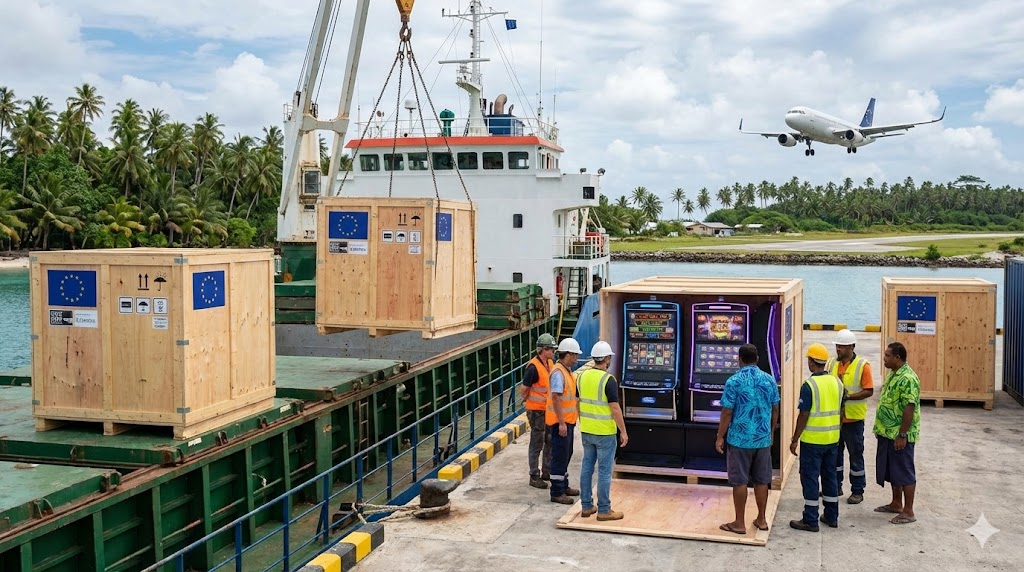
For island jurisdictions, partnering with these providers turns regulatory status into a concrete export. Operators incorporate locally, clear due‑diligence and compliance checks, and then sign content deals with European studios, effectively streaming slot technology from EU development hubs to players logging in from all over the world via island‑licensed sites.
Caribbean And Other Island Licensing Models
Some islands have been in the online‑gaming business for decades. Antigua and Barbuda, for instance, adopted liberal online‑gambling policies early and created a licensing system overseen by the Antigua and Barbuda Gaming Commission. The commission:
- Issues licences to casinos, sportsbooks, and gaming sites
- Enforces security, fairness, and responsible‑gaming standards
- Can impose heavy fines or revoke licences for violations
More recently, the Caribbean island of Nevis has launched an “Online Gaming License” regime under the Nevis Online Gaming Authority (NOGA). New rules from 2025 emphasise:
- Simplified registration and reduced bureaucracy for operators
- Access to a relatively strong local banking sector
- Ambitions to become a Tier‑1 offshore gaming jurisdiction on par with Malta or the Isle of Man
Elsewhere, non‑Caribbean islands such as the Isle of Man have long marketed themselves as high‑standard iGaming hubs, attracting operators who want both regulatory credibility and flexible tax environments.
How The Tech Actually Reaches Players
Once an operator is licensed in an island jurisdiction, it typically:
- Hosts servers and game platforms in data centres within that jurisdiction or another approved location
- Integrates slot engines and game clients from European studios via APIs and remote game servers
- Offers games to players in allowed markets, while geofencing banned jurisdictions and complying with local law
From the player’s point of view, this often looks like a single online casino brand with a mix of classic and modern slots, live tables, and instant‑win titles. Under the surface, each game may be delivered by a different European or regional provider, certified by independent test labs and monitored by both the studio’s home regulator and the island’s licensing authority.
Industry directories describe Hacksaw and similar studios as “premium suppliers” because they invest heavily in certification, language support, and multi‑currency options so their technology can plug cleanly into these multi‑jurisdiction platforms.
Why Island Nations Lean Into iGaming
For small island economies, regulated online gaming offers:
- Additional tax and licensing revenue without heavy physical infrastructure
- High‑skilled jobs in IT, compliance, and finance
- A way to leverage existing strengths in banking and corporate services
The Nevis Online Gaming Bill 2025 highlights “simple access to quality financial services” and a “relatively simple registration procedure” as core advantages for attracting operators. Antigua and Barbuda emphasise its rigorous licensing and enforcement as reasons why serious companies choose the jurisdiction over less regulated havens.
At the same time, regulators stress consumer protection. Island commissions:
- Audit operators for fairness and anti‑money‑laundering controls
- Can ban or fine operators that breach rules
- Work to block unlicensed offshore sites from targeting local players
Challenges And Future Directions
Even well‑run island regimes face challenges. Authorities in Antigua and Barbuda, for example, still struggle with offshore sites that target players without proper authorisation, despite local licensing. Nevis’s new system aims to avoid that by building a detailed regulatory framework from day one, positioning itself as a “Gold Standard” offshore centre rather than a soft‑touch option.
For European studios, the main questions are whether island regulators maintain strong reputations and whether partner operators implement responsible‑gaming tools effectively. Studios that rely on these jurisdictions must protect their own licences in Malta, the UK, or Sweden, so they have strong incentives to choose serious island partners.
What This Means For Players And Tourism Brands
For travellers and island‑focused businesses — the core Caribbean Trading audience — the rise of slot technology on island servers is mostly invisible but increasingly important. It shapes how local brands might:
- Partner with licensed casinos for loyalty programmes or resort packages
- Offer digital entertainment that aligns with responsible‑gaming standards
- Diversify revenue beyond traditional tourism while still protecting their reputation
From a player standpoint, the safest route to European‑style slot technology runs through properly licensed sites—whether hosted in Malta, the Isle of Man, Nevis, or Antigua. That means checking for visible licence seals, reading basic terms on data and responsible gaming, and treating even the most beautifully themed slot as entertainment, not a financial plan.
Island nations that get this balance right—leveraging European technology, strong local regulation, and their own service culture—can turn iGaming into another carefully curated export, much like the handcrafted gifts and experiences Caribbean Trading already specialises in.