

The new Standard is a format dominated by midrange strategies since the introduction of Streets of New Capenna. This set provided the new Triome lands to help the multicolored strategies rise in popularity. The most prevalent one seems to be Esper. It has access to powerful planeswalkers like The Wandering Emperor, Kaito Shizuki, Elspeth Resplendent, and other powerful value spells and solid removal.
But it’s not the only viable midrange strategy in the format. Jund is a powerful adversary that can go toe to toe with Esper in a battle to claim the spot of #1 best deck in Standard. And today we’re going to unveil secrets.
I usually write over at Draftsim, but today I wanted to share my experience from the Streets of New Capenna Championship directly with you here.
Intrigued? Let’s get started!
The Deck
Jund, unlike Esper, has a lot of faces in this new Standard. There are multiple ways you can build it.
You could use a Treasure-heavy approach like Shota Yasooka’s deck in the SNC Championship. Then there are the decks using Jaspera Sentinel and Magda, Brazen Outlaw. But today I’m going to go over two lists that focus on a more midrange approach and talk about their differences, and why I prefer one over another.
Jund Midrange 1
SNC Championship Jund Midrange
The Strategy
This deck’s strategy is to apply pressure with cheap and powerful creatures like Bloodtithe Harvester and Tenacious Underdog, use removal to handle early threats, and control the board with a cascade of powerful spells like Esika’s Chariot and Fable of the Mirror-Breaker.
Let’s go over each card choice and talk about them deeper.
The Creatures
Bloodtithe Harvester and Tenacious Underdog are the first two creatures from the deck, and both accomplish similar roles but with different late-game values.
Bloodtithe Harvester can serve as removal. And the Blood token is handy for turning your Voltage Surge into a Flame Slash at instant speed, or just to loot any excess amount of land. The vampire is great in multiples because you can chain them and start killing bigger creatures.
Tenacious Underdog doesn’t have an activated ability in play, but it does have a useful blitz ability that can be used to pressure your opponent’s life and give you some card advantage in the later game. The life loss is irrelevant if you already have The Meathook Massacre. Theoretically you’d only pay one life to activate it.
We also need to talk about some other creatures from both lists. First is Valki, God of Lies, which is very good on both sides. Against Esper specifically, dropping a turn 2 Valki on the play is huge because you can “steal” a Raffine, Scheming Seer from your opponent’s hand and slow them down for a turn even if they have removal. And if they don’t you can transform Valki on turn 3 and start growing it.
This is key since the only removal Esper usually runs is Vanishing Verse. And it won’t be until turn 5 when they could potentially deal with Valki via The Wandering Emperor, but you can always play around that.
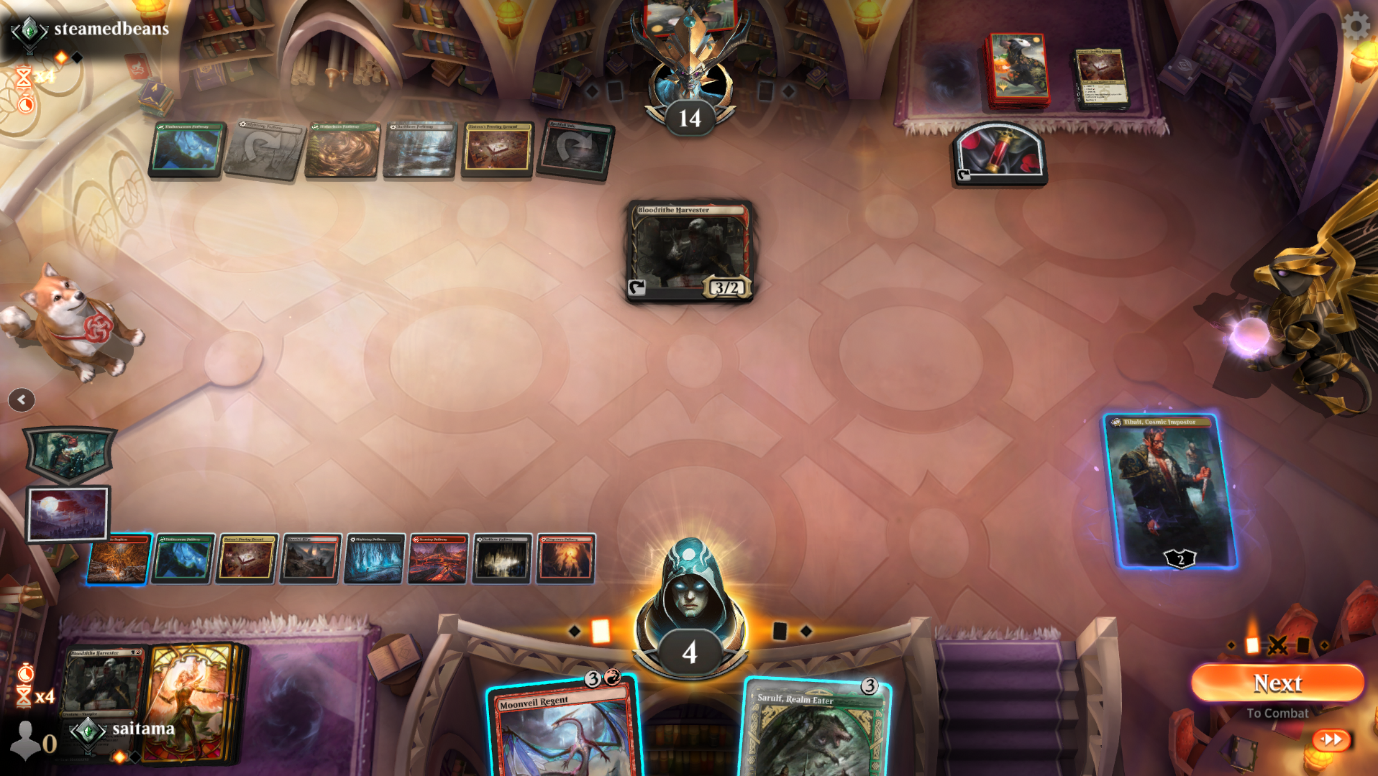
But you can always cast Valki as Tibalt, Cosmic Impostor if you happen to top deck it later in the game. It’s very hard to lose a game if Tibalt resolves.
Next, Briarbridge Tracker turned out to be good against other midrange decks. And our team went with two of them on the main deck since we expected a lot of Esper at the SNC Championship. This card is excellent because it has a solid body plus vigilance, which is very relevant against The Wandering Emperor.
Briarbridge Tracker can also crew an Esika’s Chariot by itself, which can incidentally copy some of the Clue tokens created by the Tracker if you need to.
The SNC version of Jund didn’t run any other creatures in the main deck, but my first list did.
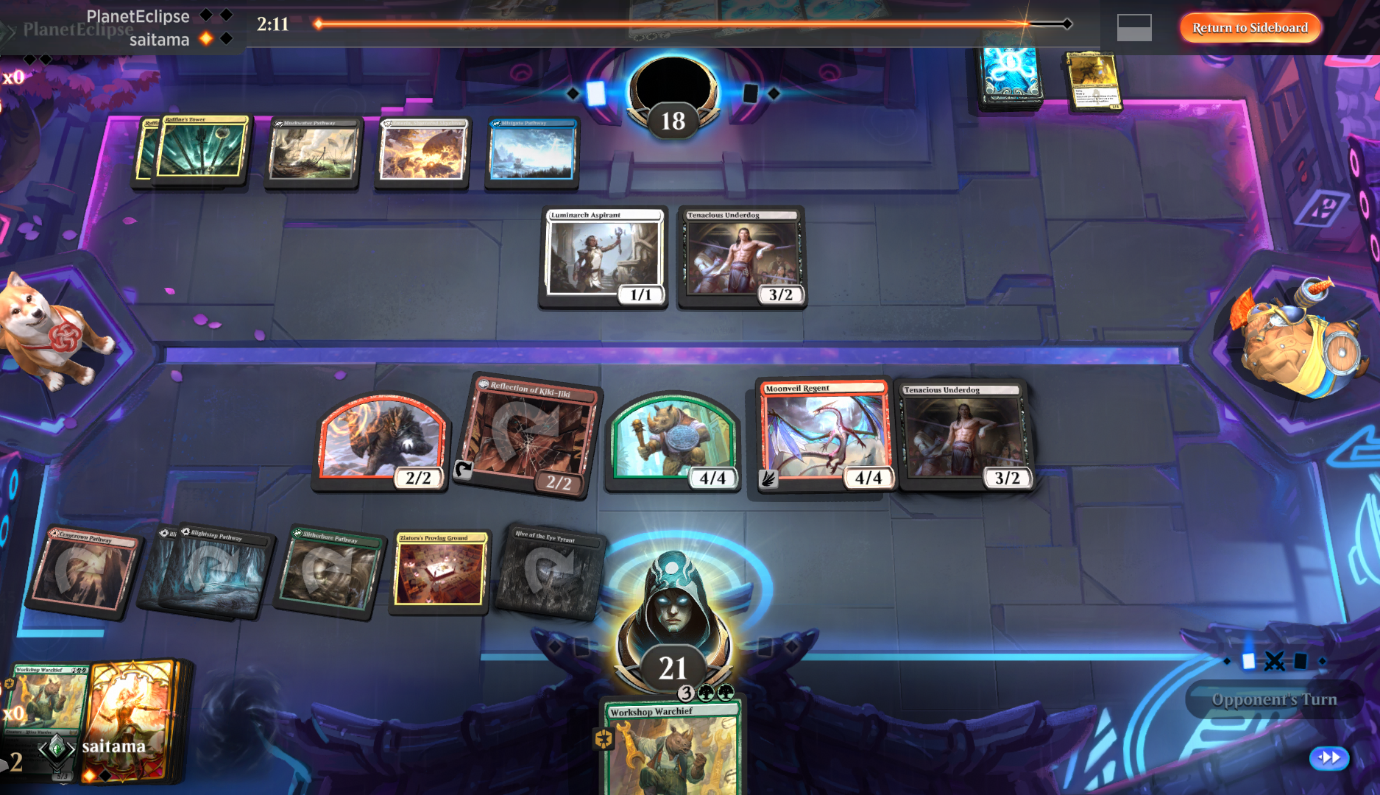
Moonveil Regent can sometimes be clunky, but it shines when you topdeck it to start chaining spells and refilling your hand. And its death trigger pairs up nicely with Reflection of Kiki-Jiki when copied.
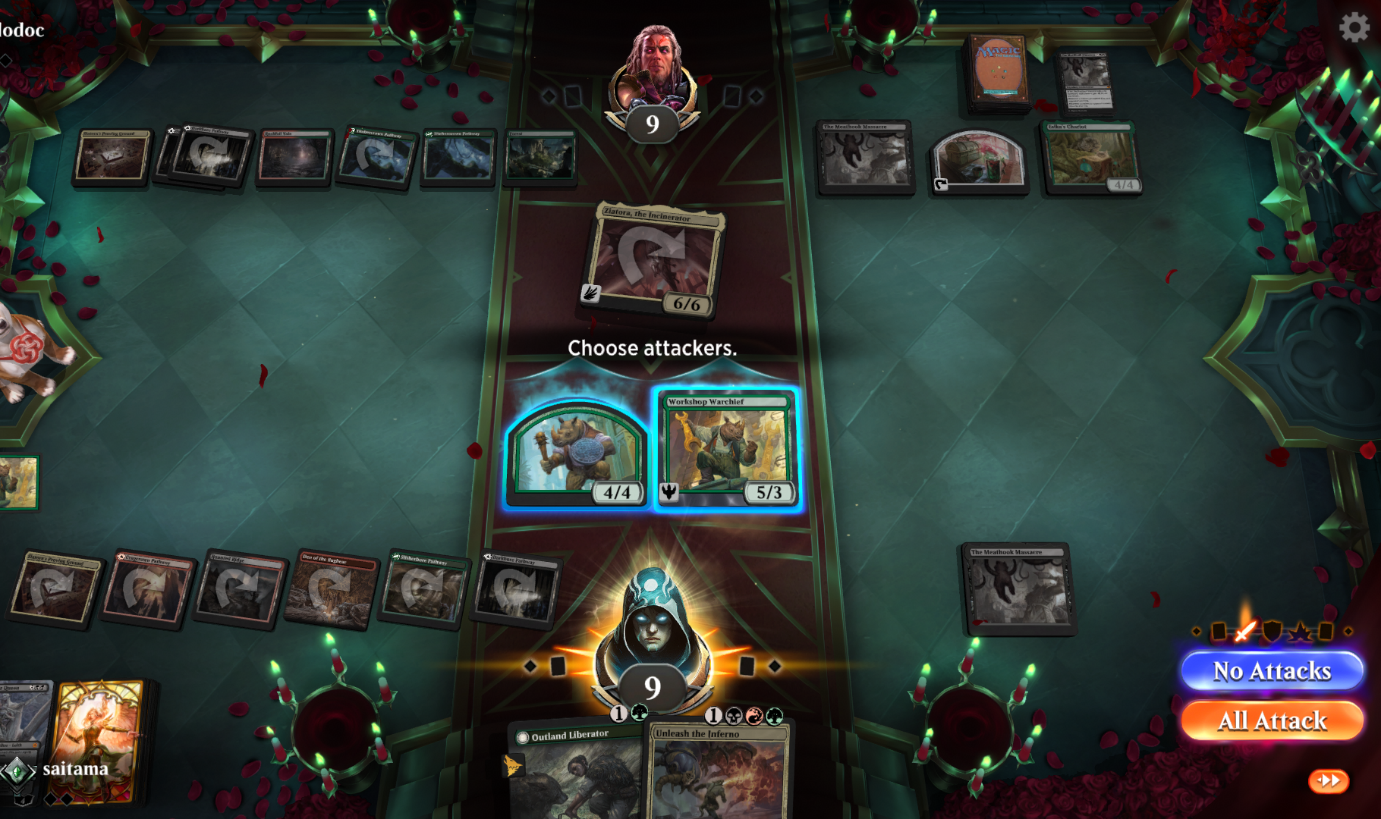
Workshop Warchief is a huge fan of good copy targets since it can copy both triggers in and out, leaving you with a huge board presence if left unchecked.
The Planeswalkers
Ob Nixilis, the Adversary is the only planeswalker that sees plays in my decklist. We were very excited when it was released because the idea of copying one of its copies with Esika’s Chariot is very lovely.
But we found two things happening that we realized after a few matches.
First, we rarely want Ob Nixilis, the Adversary on turn 3. Ideally you’ll go with one of your 2-drops into him by turn 3. But the issue is that you’re already down a card and trading your 3/2 body for a 1/1 that’s easier to attack when you do that. This also gets worse if you’re on the draw since your opponents can deal with your board quickly.
But it feels way better if you go for a turn 4 Esika’s Chariot into a turn 5 Ob Nixilis. You’ve already asserted your board presence and you can crew a Cat token and sacrifice it for the casualty ability from Ob Nixilis instead.
We realized that Ob Nixilis, the Adversary is only good against a handful of decks, mostly control ones. And while it shines on the play, it almost feels like a dead card on the draw. Because of this we only ran two main decks Ob Nixilis’ and decided to side the card out for games 2 and 3 a lot.
The other planeswalkers that we ran were Lolth, Spider Queen, and Sorin the Mirthless.
Unlike Ob Nixilis, Lolth, Spider Queen was a massive surprise for us. It quickly took over the game whenever we got to resolve it since it’s a planeswalker that protects itself and gives you card advantage if left unchecked.
Lolth paired with The Meathook Massacre was a potent combination. You usually go with a turn 4 Esika’s Chariot into a turn 5 Lolth and clean the board on turn 6. After that Lolth can create more tokens to crew the Chariot and rebuild your board again. We found ourselves activating its ultimate ability pretty often with enough creatures on the battlefield.
Sorin the Mirthless also did well acting as a “mini” Lolth. Their abilities are similar and against midrange decks. Sorin hits the battlefield earlier and is good at getting card advantage.
Arlinn, the Pack’s Hope also gets an honorable mention. I happily called this planeswalker “the fifth Esika’s Chariot.” Arlinn did very well in the final round of testing, but sadly we were already on a schedule to submit decklists so it didn’t make the 75. But make no mistake; creating 3/2 Spider tokens with reach and menace from Lolth is definitely hard to deal with.
The Removal
Bloodchief’s Thirst and Voltage Surge are our spot removals by choice. Both have a specific role on the deck.
Bloodchief’s Thirst excels at killing creatures like Werewolf Pack Leader and Luminarch Aspirant that grew outside of Voltage Surge’s range. It’s also a good cleaner for planeswalkers at sorcery speed for four mana.
On the other hand, Voltage Surge is an instant speed answer for both creatures and planeswalkers, and it can kill more significant targets with a bit of help from a Treasure or Blood token.
But if you really want things dead, Infernal Grasp is the way to go for the mere cost of two lives.
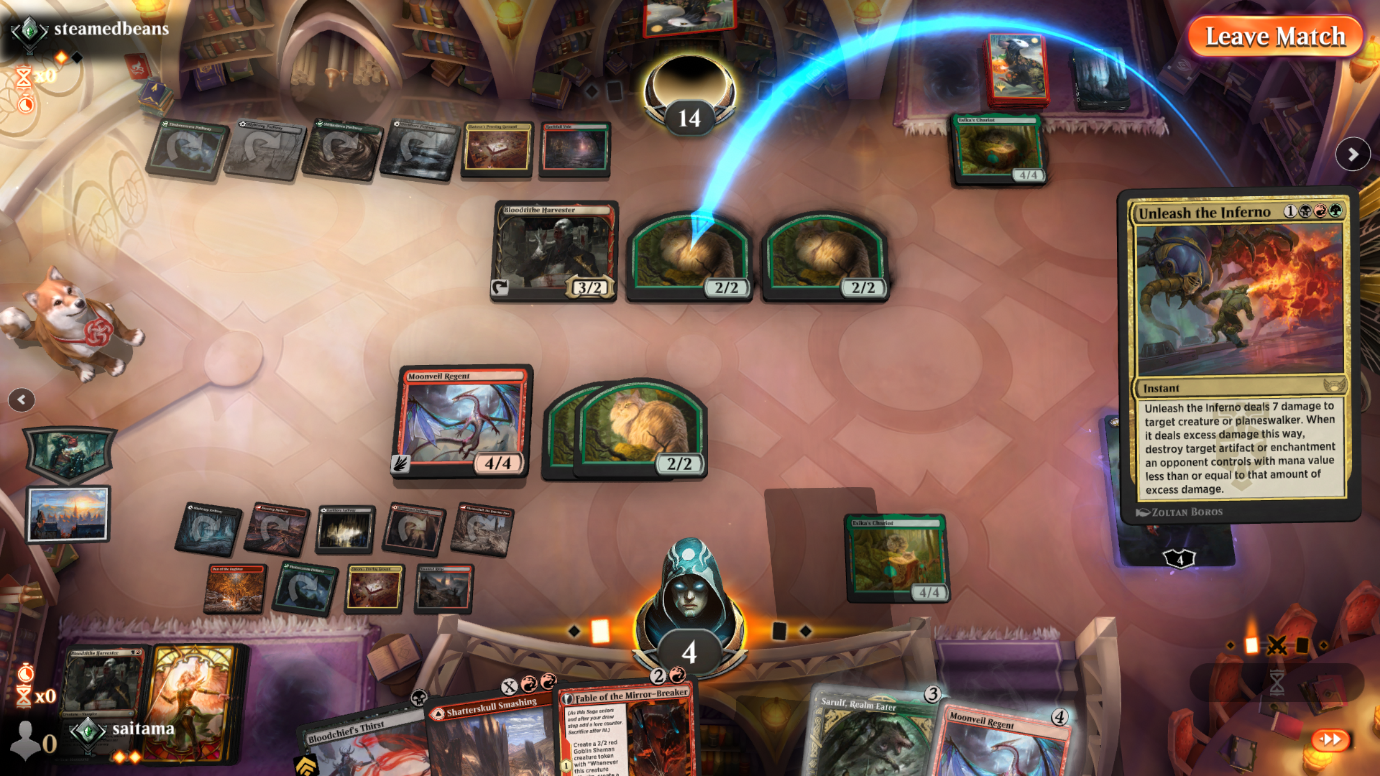
Unleash Inferno is also pretty good at killing things at instant speed. And incidentally it’s sometimes an answer for cards like Wedding Announcement or Esika’s Chariot.
The deck also has access to The Meathook Massacre as a board wipe. But it’s often good to play it as just a 2-mana pseudo-Blood Artist when you’re ahead.
Other Spells
The other spells from the deck are probably the most important.
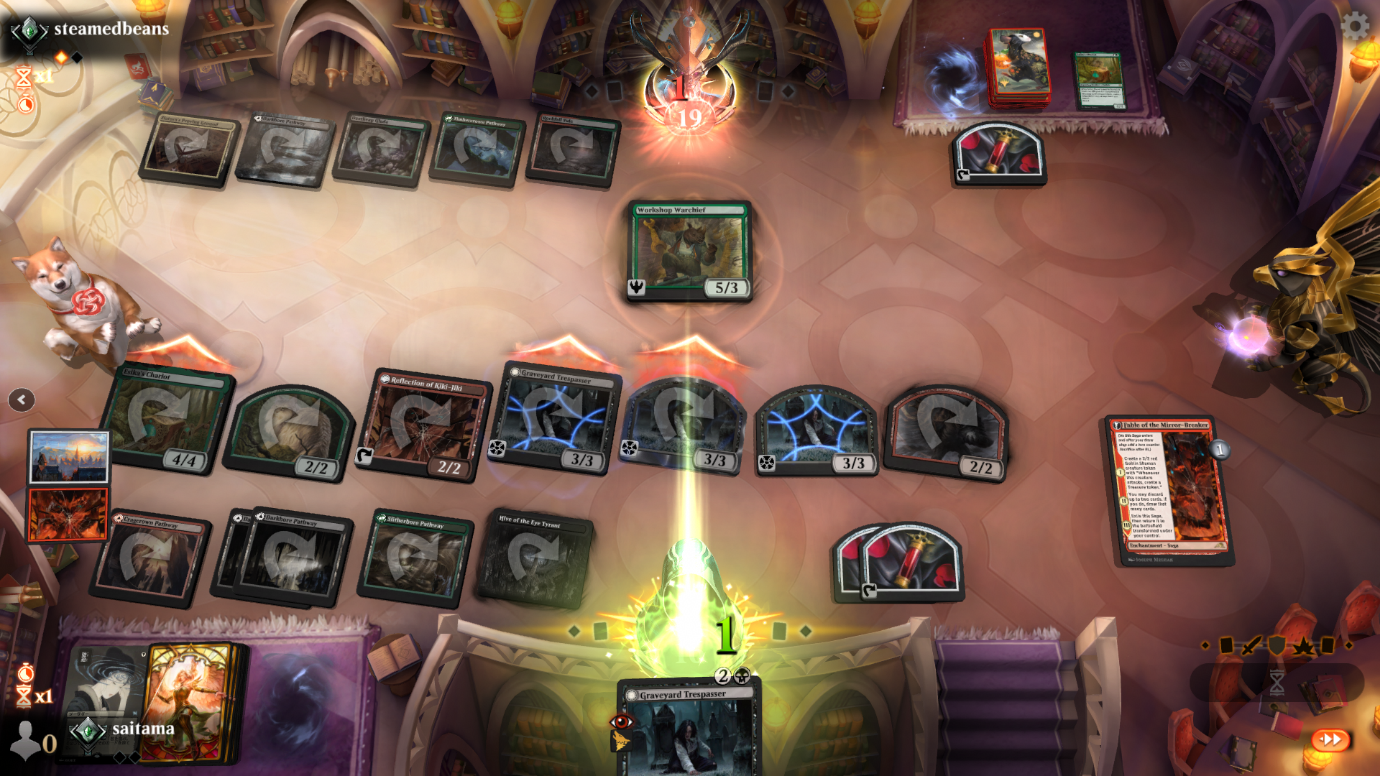
Esika’s Chariot is very good because it brings its army with it. It even starts creating more board presence when crewed.
But as if that wasn’t already enough, Fable of the Mirror-Breaker has proven to be an excellent card. Even if you deal with the creature it creates or the enchantment itself, you still need to deal with the other half of the card later in the game.
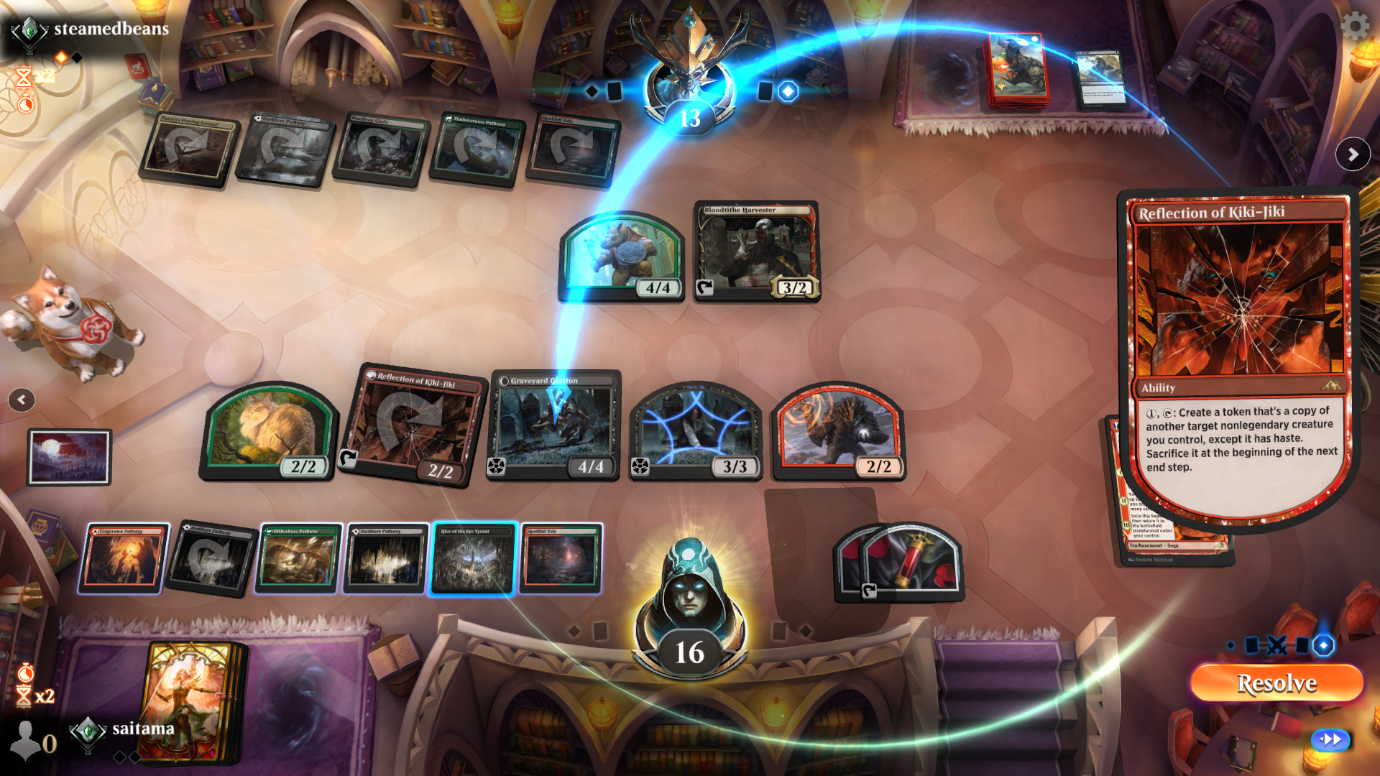
Fable has tons of synergies with the deck, and even something as silly as copying a 2/2 goblin that creates a Treasure token is significant. Especially in a deck as mana hungry as this one. There have been times where I’ve managed to cast Tibalt on turn 5 thanks to the Treasure Kiki-Jiki creates.
Next we have an exciting card, Riveteers Charm. This offers tons of versatility. It can kill any giant creature or planeswalker without targeting with the right timing, draw you three cards, or just remove your opponent’s graveyard. The last one doesn’t come up as often, but it can be useful once in a blue moon against blue decks featuring Lier, Disciple of the Drowned.
Last but not least, I brought up that we should run one copy of Duress and Ray of Enfeeblement in the main deck, especially in a meta dominated by Esper. This didn’t stick as much, but Shota Yasooka made that same decision in his list and it paid off greatly for him. So you should at least consider going with that as well.
The Mana Base
The mana base is what our team put the most effort into and was the most discussed part of the deck. We had two options: going straight Jund with an almost even distribution of red, green, and black, or just going black and splashing green.
We don’t have much room to add utility lands like Boseiju, Who Endures, and we trimmed our manland options just to run Hive of the Eye Tyrant and Den of the Bugbear.
We did acknowledge that our deck was very mana hungry and that we wanted to play things on curve as much as we could. Which is why we decided to run at least 26 or 27 lands. And we relied on DFC lands to prevent ourselves from flooding, specifically Shatterskull Smashing and Hagra Mauling.
Shatterskull Smashing was the addition I was the most impressed with. It was very good at killing big stuff or cleaning planeswalkers that create creatures like The Wandering Emperor, Kaito Shizuki, Lolth, Spider Queen, etc. in the late game.
Hagra Mauling was a card that no one else on the team liked, but it always worked for me. I think part of the reason they didn’t like it was because they didn’t try it and didn’t want to have a tap land, but I usually cast it in the first half of the game rather than putting it into play tapped, so I think we were okay running it.
Meta Choices
So you may be wondering why I’m talking about two different builds that look very similar? The answer lies in metagame calls.
The first deck is a list that I put together and had some success with, including a 5-0 run in the first League I ran with it. It doesn’t fall behind too much, and ramping into a turn 4 Workshop Warchief isn’t something to be treated lightly. It can put you back into otherwise lost games, especially when facing aggro decks like mono green or mono white.
But there’s one problem: the mana base. The first list only runs a single basic land while the second one runs a total of four. This is because we noticed that Izzet Ponza decks were rising in popularity, and they did very well against multicolor strategies like Jund in testing. Add that to the fact that our top end is a double green mana value creature and that we run three of them in the first list. You can easily see how we ended up going for a smoother mana base that doesn’t struggle with casting costs too much. But unfortunately our aggro matches got worse by a lot.
I was almost undefeated against them before we changed the mana base, and now we were struggling a lot. And the mono green matches specifically felt unwinnable.
But on the other hand our Esper match improved a lot. When we cast the Workshop Warchief it usually met an easy Vanishing Verse, and we got no value from it.
Given both factors and the fact that we expected no aggressive decks in the SNC Championships, we decided to go with the second list over the first one. But I think the first list is way better against an open field.
Tips and Tricks
This deck isn’t as straightforward to navigate. I had to spend a lot of time (weeks) mastering it. Luckily for you, I’m more than happy to share its secrets.
- You can copy Ob Nixilis, The Adversary’s token with Esika’s Chariot.
- It’s always better to lead with Bloodtithe Harvester than with Tenacious Underdog against decks running Flame-Blessed Bolt.
- Pay attention to Pathways when you decide to play each of their sides. Prioritize green whenever you have the chance.
- Don’t side out all your removal against Izzet decks. They usually bring Smoldering Egg in from the sideboard against aggro and midrange decks.
- You can cast extra copies of Esika’s Chariot and keep the first one on the battlefield to crew it with the Cat tokens recently created.
- You can close games by casting and resolving The Meathook Massacre and killing your board.
- Against Runes, always check graveyards before killing creatures with runes or enchantment creatures since Kami of Transience will go back to their hand if you’re not careful. One way to go around this is to kill creatures on the end step.
- Bluff Voltage Surge by manually tapping your mana when given the chance.
- Hive of the Eye Tyrant can’t target the graveyard if there’s a Dennick, Pious Apprentice on the battlefield.
- Suppose you attack with Esika’s Chariot and your opponent tries to exile it with The Wandering Emperor’s -2 ability. You can respond and sac the Chariot to prevent them from gaining life if you have a Voltage Surge in hand.
- If you copy a creature with Kiki-Jiki and then copy the token with Esika’s Chariot, the token will get haste and won’t be sacrificed at the EOT.
- You can use Kiki-Jiki to copy any creature at the end of your opponent’s turn so it can be used during your next one.
Sideboard Guide
Given that I have two lists and different sideboards, I’ll go by each card and explain their role against the field. I’m also going to cover matchup specific sideboards with my SNC list. But keep in mind that they’re very similar, so the sideboard strategy shouldn’t vary too much from one to the other.
Card Roles
Outland Liberator / Frenzied Trapbreaker
Outland Liberator is the card I’m most happy to have in the sideboard. Sure, it looks like a simple disenchant, but it gains tons of value if there’s a Reflection of Kiki-Jiki already on the battlefield.
There was a time when I got to kill multiple of my opponent’s enchantments with it, and it’s a great card to have against Esper or Jund. It’s even great against decks creating Treasures and playing the “draw-go” game.
Keep in mind that if you copy an Outland Liberator backside, it won’t flip if it goes to day, and vice-versa.
Ray of Enfeeblement
Ray of Enfeeblement is a must-have card. It can kill Raffine, Scheming Seer for two mana after paying the tax. And it can be used as a combat trick once in a blue moon.
Go Blank
Go Blank is a must-have against all the Izzet base decks because they often rely on their graveyard to complete their plans. This makes a huge difference against control matchups paired with your other hand disruption spells.
Sorin the Mirthless
Sorin the Mirthless is meant to be used against non-Esper midrange decks, but it can also play against Esper depending on your main deck configuration. It’s like a third Lolth post-sideboard.
Duress and Check for Traps
I like the split of two Duress’ and one Check for Traps post-sideboard. There are times that you’d prefer to get rid of a Goldspan Dragon against Izzet decks rather than other noncreature spells.
Unleash the Inferno
Unleash the Inferno is an excellent card against Runes and Esper since you usually 2-for-1 them, and it always feels great when you get to do so. But this also overperforms against Jund because you can almost cleanly answer opposing Esika’s Chariots, and it deals with Fable of the Mirror-Breaker.
Riveteers Charm
You should run at least one Riveteers Charm in the sideboard for its versatility if you’re not running one in the main deck.
Graveyard Trespasser
Last but not least is Graveyard Trespasser. This excels against decks using Tenacious Underdog and Izzet decks in general since it incidentally gets rid of your opponent’s cards.
Esper Matchups
The initial turns against Esper are just a battle to disrupt their plans by killing their turn 2 play to prevent them from getting value from their 3-drop. Always keep hands with removal for this reason and mulligan ones with no early plays.
Post-sideboard you want to replace your removal with more efficient ones, and some cards to kill Wedding Announcement. One of the ways to lose against Esper is by not being able to get past the big tokens. You also want to bring in Graveyard Trespassers as a hard-to-kill card that can deal with opposing Tenacious Underdogs.
In
- 2 Outland Liberator
- 2 Ray of Enfeeblement
- 1 The Meathook Massacre
- 1 Unleash the Inferno
- 2 Graveyard Trespasser
Out
- 1 Voltage Surge
- 4 Tenacious Underdog
- 2 Ob Nixilis, the Adversary
- 1 Bloodchief’s Thirst
Jund Matchups
Jund “mirror” matches will depend on the version your opponents play. But this version is generally favored against others because we have a better late game plan and fewer dead cards like mana dorks from the Jund Treasure deck.
Post-sideboard you’ll bring artifact and enchantment hate against Esika’s Chariot and Fable of the Mirror-Breaker, and a third copy of The Meathook Massacre. You’ll usually want to wait until the Fable flips to get the total value.
In
- 2 Outland Liberator
- 1 Sorin the Mirthless
- 1 The Meathook Massacre
- 1 Unleash the Inferno
- 2 Graveyard Trespasser
Out
- 4 Tenacious Underdog
- 2 Ob Nixilis, the Adversary
- 1 Bloodchief’s Thirst
Runes Matchups
Runes is somewhat of a challenging match if they can chain Showdown of the Skalds. Otherwise this deck can survive at least one of them and go over the top with relative ease. All of Runes’ creatures are must-kill targets, but the most dangerous one is probably Jukai Naturalist since it makes all other enchantments cheaper.
Again, avoid killing enchantments during your main phases if they have Kami of Transience in the graveyard. Just wait until the end of the turn.
In
- 2 Outland Liberator
- 1 Sorin the Mirthless
- 1 The Meathook Massacre
- 1 Unleash the Inferno
- 2 Duress
- 1 Check for Traps
Out
- 2 Tenacious Underdog
- 2 Ob Nixilis, the Adversary
- 2 Lolth, Spider Queen
- 2 Briarbridge Tracker
Izzet Matchups
You shouldn’t worry about Ponza decks too much with four basic lands in the main deck. But combo versions like the ones running Goldspan Dragon can be tricky to beat. Try to apply fast pressure, but don’t overcommit the board. Tenacious Underdog is perfect for this.
Remember to keep some removal against the Smoldering Egg post-sideboard. Almost every list runs at least three copies of those and always brings it against midrange decks.
In
- 2 Go Blank
- 2 Duress
- 1 Check for Traps
- 1 Riveteers Charm
- 2 Graveyard Trespasser
Out
- 2 The Meathook Massacre
- 1 Unleash the Inferno
- 2 Voltage Surge
- 2 Lolth, Spider Queen
- 1 Bloodchief’s Thirst
Other Cards to Try
This deck is so versatile that you can add almost anything to it and it’ll work. With that said, let’s go over some cards that barely missed the cut in both lists.
Titan of Industry
Titan of Industry is an excellent top end for any deck, but sadly I feel like just casting a Tibalt, Cosmic Impostor is better as a 7-drop.
Binding the Old Gods
Binding the Old Gods is a fine removal that can ramp you in the late game. The downside is that it’s at sorcery speed, but I can see how it’s excellent against other non-Esper midrange decks.
Thundering Rebuke
Thundering Rebuke is another solid option as removal since it can deal with Raffine. But just like Binding the Old Gods, being at sorcery speed is what kept it outside of our 75s.
Culling Ritual
Culling Ritual is an acceptable sideboard option against Runes and Rakdos Sacrifice decks. You should consider running a couple Rituals if you expect to run against a lot of those.
Wrenn and Seven
Another good planeswalker that has the downside of requiring double green to see play. Wrenn and Seven is also an easy target for Vanishing Verse, but they still need to deal with the token later. And your opponents will have a hard time winning if you manage to copy it.
Wrap Up
Jund is very flexible when it comes to what cards you want to run in it. Still, I feel like the core of Fable of the Mirror-Breaker, Bloodtithe Harvester, and Esika’s Chariot makes it one of the stronger decks in the format right now. Whatever you add around those is just based on preference and meta calls.
What do you think? Did you like the decks? What cards are eager for you to try? Please let us know in the comments!
That’s all I have for today. Take care, and I’ll see you in the next one!