MTG Arena Wildcards: How They Work and the Fastest Ways to Earn Them
Building the perfect deck in Magic: The Gathering Arena requires more than just skill and strategy. You need the right cards. That’s where wildcards come in, serving as Arena’s primary crafting currency and the key to unlocking your collection’s potential.
Understanding how wildcards work can transform your Arena experience. Whether you’re a free-to-play grinder or someone willing to invest, knowing the mechanics behind wildcard acquisition helps you build competitive decks faster and more efficiently.
The Four Pillars of Wildcard Rarity
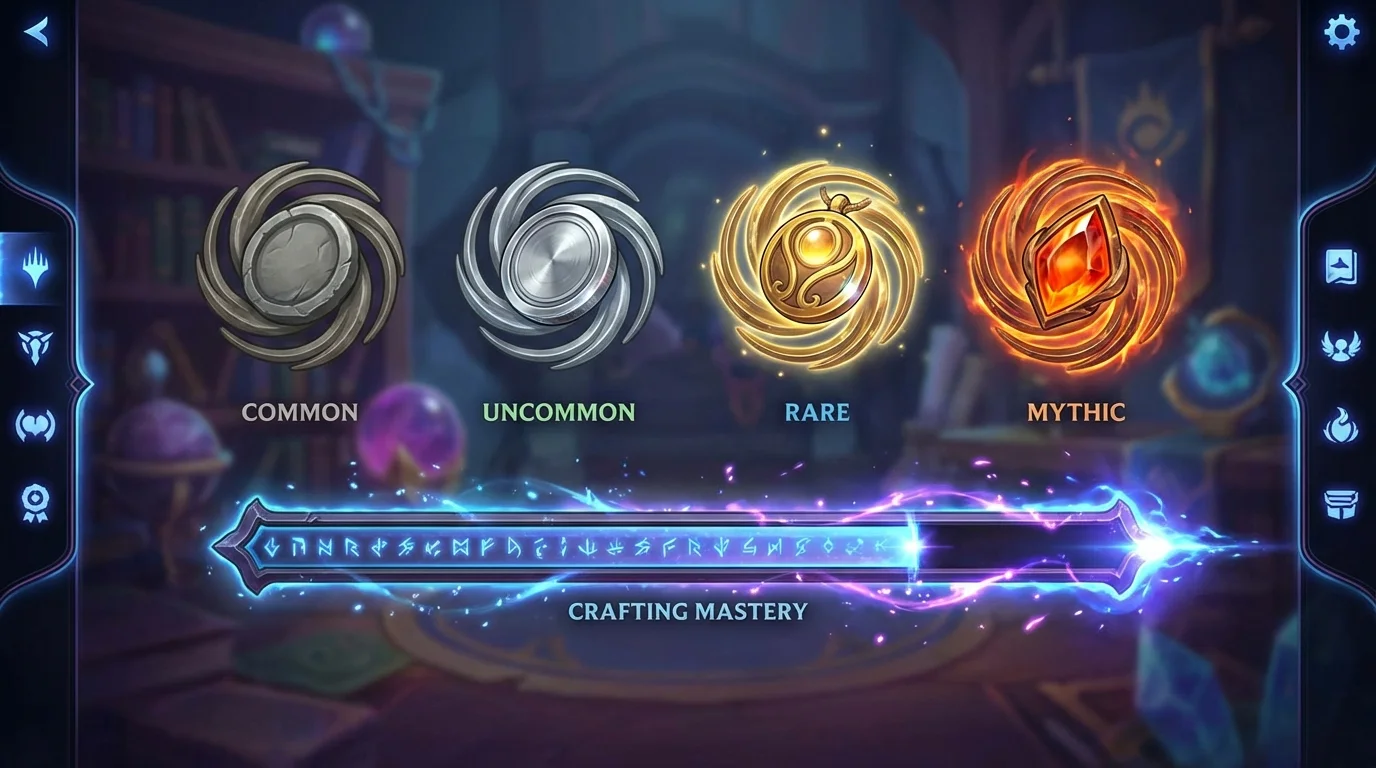
Wildcards mirror the card rarity system you already know from paper Magic. Common, Uncommon, Rare, and Mythic Rare wildcards each correspond to their matching rarity level. This one-to-one relationship means you’ll need a rare wildcard to craft a rare card, and a mythic wildcard for those powerful mythics that define competitive formats.
The system prevents any cross-rarity conversions. You cannot, for instance, combine multiple common wildcards to create a rare. Each wildcard type exists in its own economy, which makes understanding acquisition rates for each rarity crucial to your collection-building strategy.
How the Wildcard Track Actually Works
Arena uses a progress-based system called the wildcard track. Every time you open a pack from your collection screen, you advance along this track toward guaranteed wildcards. However, the mechanics differ significantly between rarities.
The rare wildcard track operates on a simple six-pack cycle. Open six packs, earn one rare wildcard. This consistency provides a reliable baseline for planning your crafting goals. Meanwhile, uncommon wildcards follow their own separate six-pack cycle, ensuring you’ll never lack the building blocks for your deck’s supporting cast.
Mythic wildcards require more patience. Instead of having their own track, they interrupt the rare wildcard cycle. Every fourth cycle—meaning every 24 packs—awards a mythic wildcard instead of a rare one. This means opening 24 packs guarantees you three rare wildcards and one mythic wildcard from track progress alone.
Importantly, only packs opened from the main “Packs” screen count toward these tracks. Draft and sealed event packs don’t contribute to your progress, though they offer their own value proposition through gameplay rewards.
The Random Element: In-Pack Wildcard Drops
Beyond the guaranteed track progress, wildcards can appear randomly within booster packs themselves. Open any pack and you might find a wildcard replacing the card that would normally occupy that slot.
These random drops provide pleasant surprises that accelerate your collection growth. A rare or mythic wildcard might replace the rare/mythic slot in your pack. Similarly, uncommon wildcards can appear in the uncommon slot. These bonus wildcards arrive independently of your track progress, meaning you can receive both a random wildcard and advance your track from the same pack.
Daily Quests: Your Gold Foundation
Consistent play matters more than marathon sessions when building wildcard resources. Daily quests form the economic backbone of Arena’s free-to-play experience, offering between 500 and 750 gold per completion.
The quest system rewards regular engagement. Arena stores up to three quests maximum, which means missing more than three consecutive days results in permanently lost quest opportunities. Additionally, you can reroll one quest every 24 hours, giving you a chance to convert a 500-gold quest into a 750-gold reward.
Since 1,000 gold purchases one booster pack, completing daily quests efficiently translates directly into wildcard track progress. Two 500-gold quests equal one pack. A 750-gold quest plus a 500-gold quest nets you 1.25 packs worth of currency. Over weeks and months, this daily discipline compounds significantly.
Golden Packs and Strategic Purchasing
Not all packs contribute equally to your wildcard acquisition. Standard-legal packs progress what Arena calls the “golden pack meter,” which provides bonus wildcard opportunities beyond the standard track system.
As of January 2026, Foundations—which released in November 2024 as a permanent Standard staple—and multiple 2024-2025 sets remain Standard-legal. Focusing your pack purchases on these sets maximizes both your golden pack progress and ensures you’re acquiring cards relevant to the current competitive metagame.
Always check the store interface before purchasing. Packs that count toward golden pack progress display specific indicators. This bonus system rewards focused collection-building rather than scattered purchasing across multiple sets.
The Vault: Hidden Progress You’re Always Making
Arena includes a less visible but valuable wildcard source called the Vault. This system tracks duplicate commons and uncommons beyond the four-copy playset limit. Once you own four copies of a common or uncommon, any additional copies contribute to filling your Vault meter.
When the Vault reaches 100% completion, it rewards you with one mythic wildcard, two rare wildcards, and three uncommon wildcards. While progress happens slowly—especially compared to track-based wildcards—the Vault represents pure bonus resources from cards you were opening anyway.
The Vault essentially transforms excess copies into meaningful value. Over extended play periods, particularly for players who draft frequently or open numerous packs, Vault openings can provide significant wildcard injections.
Duplicate Protection: The Set Completion Advantage
Arena’s duplicate protection system fundamentally changes once you complete rarity tiers within a set. When you already own four copies of every rare in a set, opening that set’s packs converts duplicate rares into 20 gems each. Mythic duplicates convert to 40 gems.
This gem conversion creates an interesting economic loop. Those gems can purchase additional packs, which progress your wildcard tracks for other sets. Moreover, wildcard drops can still occur even in packs from completed sets, meaning you’re never truly wasting pack openings.
Set completion particularly benefits players focusing on Standard formats. Completing the rares in one or two key sets transforms those sets’ packs into gem-and-wildcard engines rather than pure collection tools.
Limited Events: The Draft Consideration
Draft and sealed events occupy a unique position in wildcard economics. Packs you open during these events don’t contribute to wildcard track progress. However, this limitation doesn’t make Limited worthless for wildcard hunting.
Prize structures for Limited events often include regular booster packs. These prize packs absolutely count toward your wildcard tracks when you open them from your collection. Additionally, skilled Limited players can convert their entry fee into multiple packs worth of prizes, multiplying their wildcard acquisition rate compared to direct pack purchases.
The gems earned from Limited events—whether from prizes or duplicate rare conversions—provide another path to packs. Strong Limited players effectively subsidize their wildcard collection through gameplay skill.
Constructed Events and Performance-Based Rewards
Constructed events offer another avenue for players with competitive decks. These events award prizes based on your win record, with successful runs netting multiple booster packs alongside other rewards.
Since these prize packs count toward wildcard track progress, constructed events can accelerate collection building for players confident in their deck’s performance. A strong event record transforms your existing collection into resources for expanding that collection further.
Direct Purchase: The Premium Option
Arena allows direct wildcard purchases using gems, the game’s premium currency. While this option exists, it’s generally considered the least cost-effective method for acquiring wildcards.
Free-to-play players should almost universally avoid direct wildcard purchases. The gem-to-wildcard conversion rate heavily favors buying packs instead, since packs provide both wildcard track progress and the cards themselves, alongside random wildcard drop chances.
Strategic Collection Building for 2026
The current Standard environment shapes optimal wildcard spending. Foundations’ November 2024 release established a permanent Standard core, meaning wildcards invested in Foundations cards remain relevant indefinitely rather than rotating with yearly Standard changes.
This permanence makes Foundations potentially the smartest wildcard investment for players concerned about long-term value. Cards like Llanowar Elves and other format staples from Foundations will remain Standard-legal, unlike sets that will eventually rotate.
Beyond Foundations, multiple 2024-2025 sets continue shaping Standard’s metagame. Researching current tier-one archetypes before spending wildcards prevents wasting resources on cards that don’t see competitive play.
The Free-to-Play Optimization Path
Maximizing wildcard acquisition without spending money requires discipline and consistency. Log in daily to complete quests, ensuring you never exceed the three-quest storage cap. Reroll 500-gold quests for chances at 750-gold upgrades.
Focus pack purchases on Standard-legal sets that progress golden pack meters. Track your progress toward rare completion in key sets, as duplicate protection can generate additional purchasing power through gem conversion.
Consider whether your skills lean toward Limited or Constructed events. Strong Limited players can essentially play infinite drafts through prize recycling, generating substantial wildcard resources over time. Constructed specialists might profit more from event grinding with proven decks.
The Mathematics of Patience
Understanding wildcard rates helps set realistic expectations. Opening six packs guarantees one rare wildcard from track progress alone. Completing a full mythic cycle requires 24 packs for one mythic wildcard through the rotation system.
For free-to-play players completing daily quests, this translates to roughly one rare wildcard every six days (assuming 1,000 gold per day from quests). Building a deck requiring 20-30 rare wildcards takes weeks or months without additional resource injections from events, limited play, or Vault openings.
This timeline shouldn’t discourage you. Arena’s economy rewards consistent engagement over time. Meanwhile, draft chaff and less competitive cards help you explore formats like Historic or Brawl while accumulating wildcards for your next competitive build.
Looking Forward
Wildcards represent Arena’s solution to the fundamental challenge of digital card games: providing collection progression that feels rewarding without completely abandoning the scarcity that makes deckbuilding meaningful.
The system works best for players who understand its mechanics and optimize accordingly. Track your progress across multiple systems—wildcard tracks, golden packs, Vault completion, and set collection rates. Diversify your play between formats that generate different types of value.
Most importantly, remember that wildcards serve deck construction, not collection completion. Focus your wildcards on cards that enable specific strategies rather than trying to own everything. A targeted approach builds competitive decks far faster than scattered crafting across multiple archetypes.
Whether you’re grinding free-to-play or supplementing with occasional purchases, the wildcard system provides clear paths to the cards you need. Master these mechanics, maintain consistency, and watch your collection—and your win rate—grow.